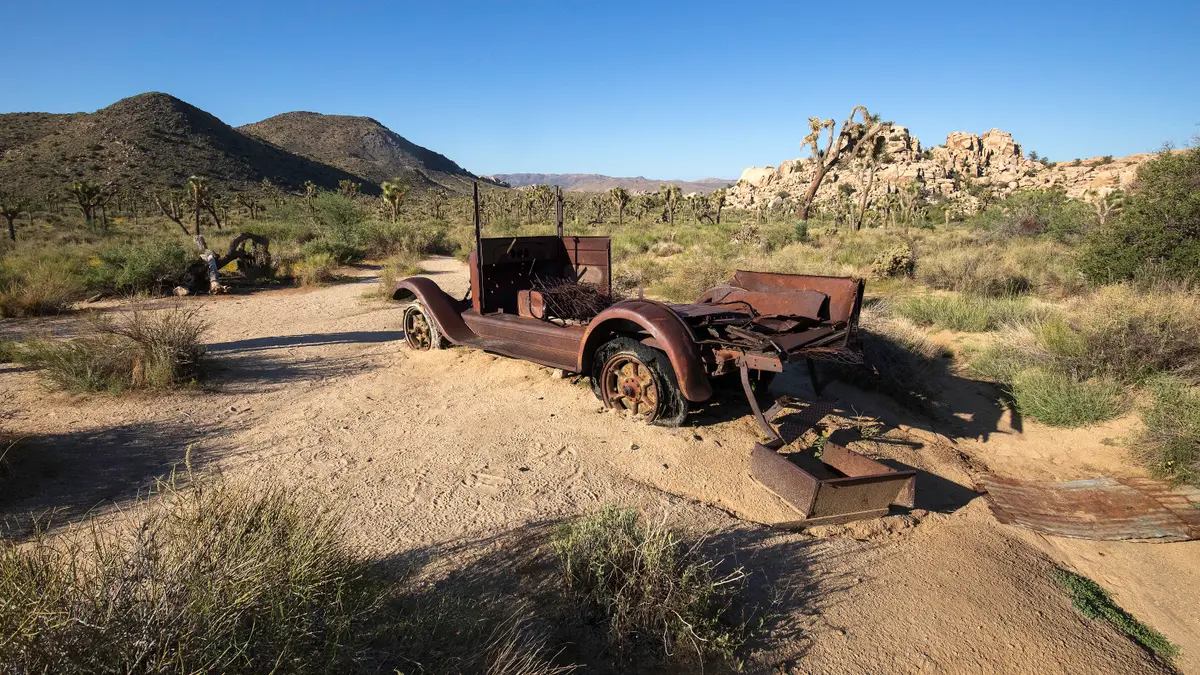
Wall Street Mill takes you to one of Joshua Tree's best-preserved mining ruins through a classic desert wash experience. The 1.8-mile round trip follows sandy washes and gravel paths to a historic gold mill surrounded by rusted automobiles — a genuine piece of Mojave Desert history that feels more like discovery than destination.
Trail Details
- 🏃Activities
- Hiking
- 📊Difficulty
- Moderate
- 🔁Trail Type
- out and back
- 📏Distance
- 2 miles
- ⬆️Elevation Gain
- 80 ft
- 🪨Surface
- sand
- 🌤️Best Seasons
- october, november, december, january, february, march, april, may
- 📍Location
- CA
- 🐕Dogs Allowed
- No
- 💵Fee
- Free
Overview
This walk embodies Joshua Tree's quieter side. While climbers swarm the boulder fields nearby, the mill trail draws hikers into the park's mining past through terrain that feels authentically remote. The route follows established paths for most of the distance, then drops into a sandy trench for the final approach — classic desert navigation that rewards attention to the landscape.
The mill itself anchors the experience. Built to process gold ore from local claims, the structure remains largely intact, complete with machinery and the kind of period details that make Western movies feel authentic. Several vintage automobiles rust nearby, their presence explained by the area's role as a homestead and working mine through the mid-20th century.
What to Expect
The trail starts from either the main Barker Dam parking area or a smaller dirt lot accessed via Queen Valley Road. Both have restrooms, though the dirt lot puts you slightly closer to the mill. Early portions cross typical high desert terrain — gravel paths threading between scattered Joshua trees and granite outcroppings.
About halfway through, an old windmill marks your progress toward the mill site. A short detour leads to the pink ruins of Wonderland Ranch, worth the extra steps for context about the area's ranching history. The final 0.2 miles drops into a sandy wash that can feel like walking through loose beach sand — bring trekking poles if you have them.
The mill site itself is fenced for safety, but you can examine the machinery and buildings from close range. The rusted cars scattered around the property tell their own stories about desert isolation and the practical challenges of maintaining equipment in this environment.
Tips & Logistics
Start early, especially October through May. Morning light reveals the best details on the mill machinery, and you'll avoid the heat that builds in the exposed washes by midday. Summer hiking here requires dawn starts and serious sun protection — temperatures routinely exceed 100°F with minimal shade anywhere on the route.
Water management matters more than the short distance suggests. The sandy sections and desert heat increase effort and fluid loss. Bring more than you think you need, plus electrolytes if you're prone to cramping.
The turnoff from Park Boulevard sits 12 miles west of the Pinto Basin Road intersection. Drive 1.5 miles north to reach the main parking area, or turn right on Queen Valley Road for the smaller dirt lot. Both fill on busy weekends, so arrive before 10 AM during peak season.
Navigation stays straightforward on established trail, but the final sandy approach can confuse first-time visitors. Keep the mill structures in sight and follow the most worn path through the wash. Cell service disappears once you leave the parking area.
Dogs aren't permitted on the trail, though you can walk them on nearby dirt roads including Bighorn Pass Road. Standard Joshua Tree entry fees apply — $30 per vehicle. The mill artifacts remain protected; leave everything as you find it for future visitors to discover.