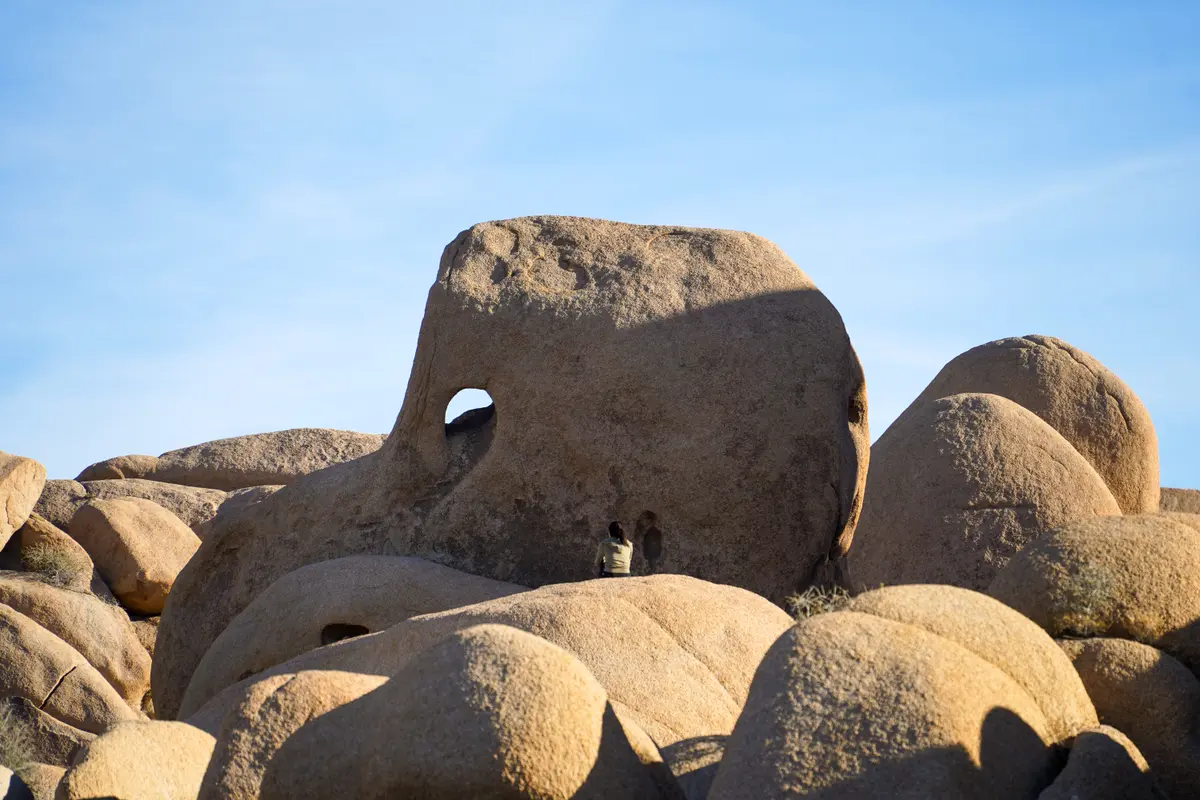
Skull Rock delivers classic Joshua Tree without the commitment. This 1.7-mile loop puts you among the park's signature monzogranite formations and twisted Joshua trees, with the actual skull-shaped boulder sitting just 70 feet from your car. It's desert hiking distilled to its essence — sandy washes, granite obstacles, and that particular Mojave silence.
Trail Details
- 🏃Activities
- Hiking
- 🔁Trail Type
- loop
- 📏Distance
- 1.7 miles
- 🪨Surface
- sand and rock
- 🌤️Best Seasons
- october, november, december, january, february, march, april, may
- 📍Location
- CA
- 🐕Dogs Allowed
- No
- 💵Fee
- Free
Overview
The trail reads like a sampler of Joshua Tree's greatest hits. You'll thread between house-sized granite boulders, cross sandy washes dotted with cholla and Joshua trees, and navigate the kind of rock scrambles that define desert hiking. The skull formation itself — a weathered granite dome with eye sockets and a gaping mouth — anchors the route, but the real draw is the terrain variety packed into less than two miles.
This isn't a wilderness experience. Park Boulevard bisects the loop, and you'll walk through Jumbo Rocks Campground mid-route. But that accessibility is the point. First-time desert hikers get a proper introduction to walking on sand and navigating around granite obstacles without committing to a day-long trek.
What to Expect
The terrain shifts constantly. You'll start on hard-packed dirt, drop into deep sand that grabs at your boots, then scramble over uneven rock surfaces. The trail narrows to two feet in places, then opens to a six-foot-wide corridor. Near the campground crossing, a section of rocky steps climbs 20 to 40 feet — the only real elevation challenge on an otherwise flat route.
Navigation is straightforward despite the varied terrain. The trail forms a clear loop with trailheads on both sides of Park Boulevard. The northern section provides access to the Discovery Trail, which connects to the Split Rock Loop if you want to extend the hike to five or six miles total.
The granite formations dominate the visual experience. These aren't the towering walls of Yosemite, but the monzogranite boulders create their own geography — rooms and corridors, hidden alcoves, and natural viewing platforms. Joshua trees emerge from sandy pockets between the rocks, their alien profiles silhouetted against the typically clear desert sky.
Tips & Logistics
Start before 10 AM during summer months. The trail offers almost no shade, and desert heat builds fast once the sun gets working. Even in winter, bring more water than seems reasonable — desert air pulls moisture from your body in ways that surprise lowland dwellers.
The Skull Rock Parking Area sits 11 miles from the Oasis Visitor Center and 23 miles from the Joshua Tree Visitor Center. Standard national park entry fees apply. Don't park in designated campsites without a reservation — the rangers issue fines for this.
Cell service doesn't exist out here, so download offline maps or carry a paper backup. The terrain isn't complex enough to get seriously lost, but granite formations can disorient you if you wander off-trail.
Trail conditions vary with the weather. Recent rains can make sandy sections firmer and more pleasant to walk, while extended dry spells create deeper, more energy-sapping sand. Either way, the rocky steps near the campground require attention — the granite can be slick, and the uneven surfaces catch boots and ankles.
Service animals are welcome, but pets and emotional support animals aren't allowed on any park trails. The granite formations attract rock climbers year-round, so expect to see chalk marks and the occasional rope team working the nearby walls.
This trail works as a quick morning warm-up before tackling longer desert routes, or as a complete desert experience for those testing their interest in this landscape. The skull formation photographs well in early morning or late afternoon light, when the granite takes on the golden tones that make Mojave sunrises and sunsets legendary.