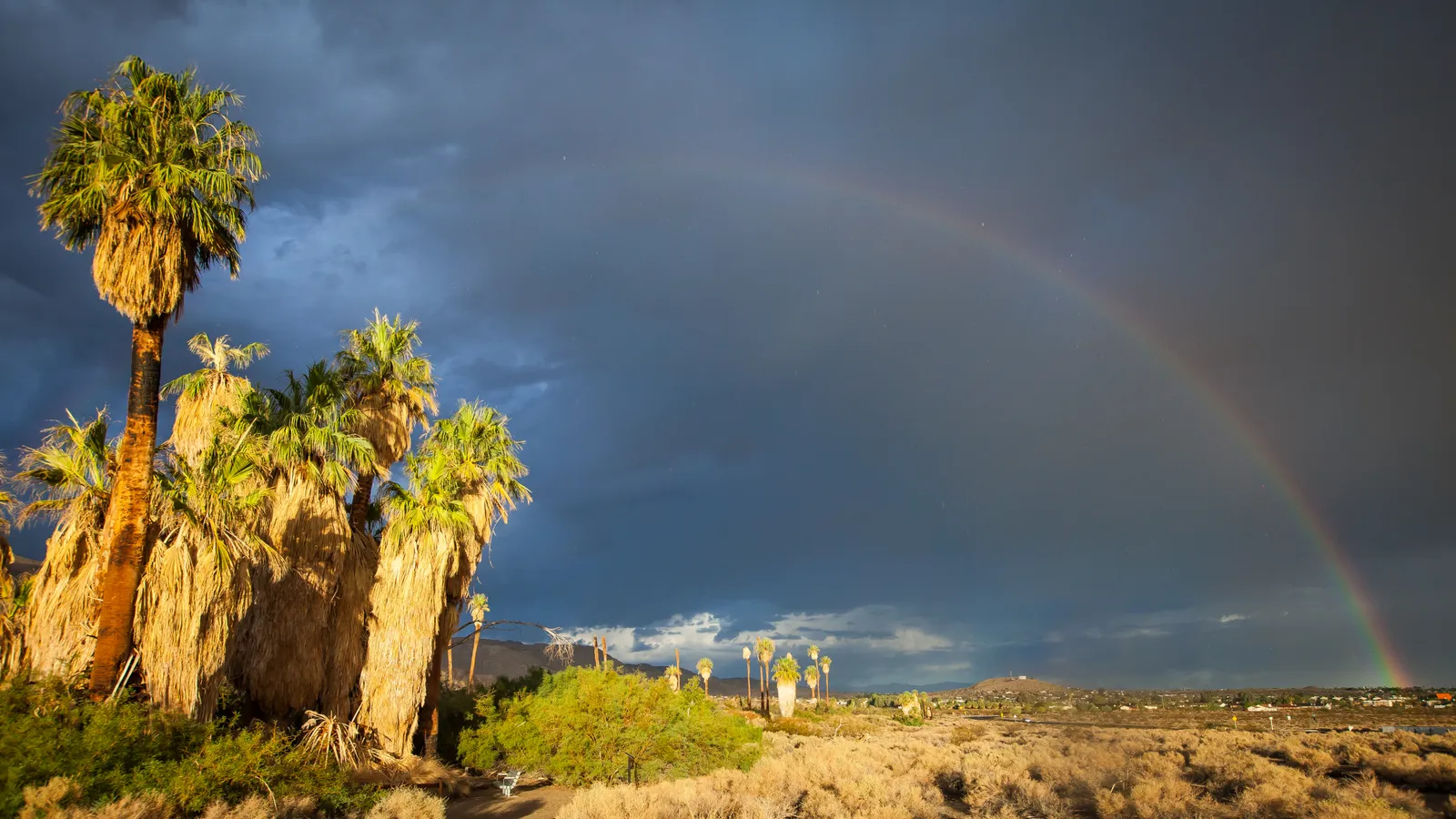
The only trail in Joshua Tree where you can bring your dog is also one of the gentlest — a half-mile paved loop around the park's most accessible desert oasis. This is Joshua Tree's front door: an easy introduction to desert ecology that works for wheelchairs, strollers, and anyone looking for a quick desert walk without the full commitment.
Trail Details
- 🏃Activities
- Hiking
- 📊Difficulty
- Easy
- 🔁Trail Type
- loop
- 📏Distance
- 0.5 miles
- 🪨Surface
- paved
- 🌤️Best Seasons
- january, february, march, april, may, june, july, august, september, october, november, december
- 📍Location
- CA
- 🐕Dogs Allowed
- Yes
- 💵Fee
- Free
Overview
The Oasis of Mara sits behind the park's main visitor center in Twentynine Palms, where a cluster of California fan palms marks one of the few reliable water sources in this stretch of the Mojave. The paved loop takes you around the spring and through interpretive displays explaining how this small pocket of green has supported life — human and otherwise — for centuries.
This is more cultural site than wilderness experience. The Serrano called this place "Mara," meaning "the place of little springs and much grass," and it served as an important stop along major trading routes. Today's oasis exists because park staff installed irrigation systems to keep the palms alive as groundwater levels dropped — first in 1985, then again in 2024 when the original system failed.
The contrast hits immediately: you're walking on concrete past palm fronds while the vast desert spreads in every direction. It's artificial in the technical sense, but the wildlife doesn't seem to mind. The water still draws birds, small mammals, and the occasional coyote despite the steady foot traffic.
What to Expect
The entire loop runs on smooth concrete, wide enough for wheelchairs to pass comfortably. Benches appear at regular intervals, and the minimal elevation gain means most people complete the circuit in 15-20 minutes. Information panels explain the oasis ecosystem and the area's human history, though you can easily skip the educational component and just enjoy the shade.
The main palm grove centers on the spring itself, with additional trees scattered nearby. Fan palm roots reach down thirteen feet to tap groundwater, creating these isolated pockets of green that define desert oasis ecology. The modern irrigation system keeps new palm seedlings thriving, so the grove continues to expand slowly.
Water fountains, restrooms, and picnic tables cluster near the trailhead. The parking area includes two designated accessible spaces, both van-accessible with proper striping.
Tips & Logistics
Currently, the trail experiences partial closure due to flood damage from recent monsoon events. The main oasis section remains accessible, but the loop may not complete depending on ongoing repairs. Check current conditions at the visitor center before starting.
This is Joshua Tree's only dog-friendly trail, though leash requirements apply strictly. The paved surface stays hot during summer months — test it with your hand before letting dogs walk on it during peak heat.
The trail works year-round, but early morning or late afternoon timing improves the experience during warmer months. Summer temperatures regularly exceed 100°F, making midday walks uncomfortable even on pavement. Winter offers the most pleasant conditions, with mild days and cool evenings.
No permits needed beyond the standard park entrance fee. Water is available at the trailhead, but this short walk doesn't require carrying supplies. The visitor center adjacent to the parking area offers detailed maps, current conditions, and ranger expertise for planning longer adventures deeper in the park.
For families with small children or mobility limitations, this represents the most accessible taste of Joshua Tree's desert environment. It won't satisfy experienced hikers looking for solitude or challenge, but it serves its purpose as an introduction to desert ecology without requiring significant time or fitness commitments.