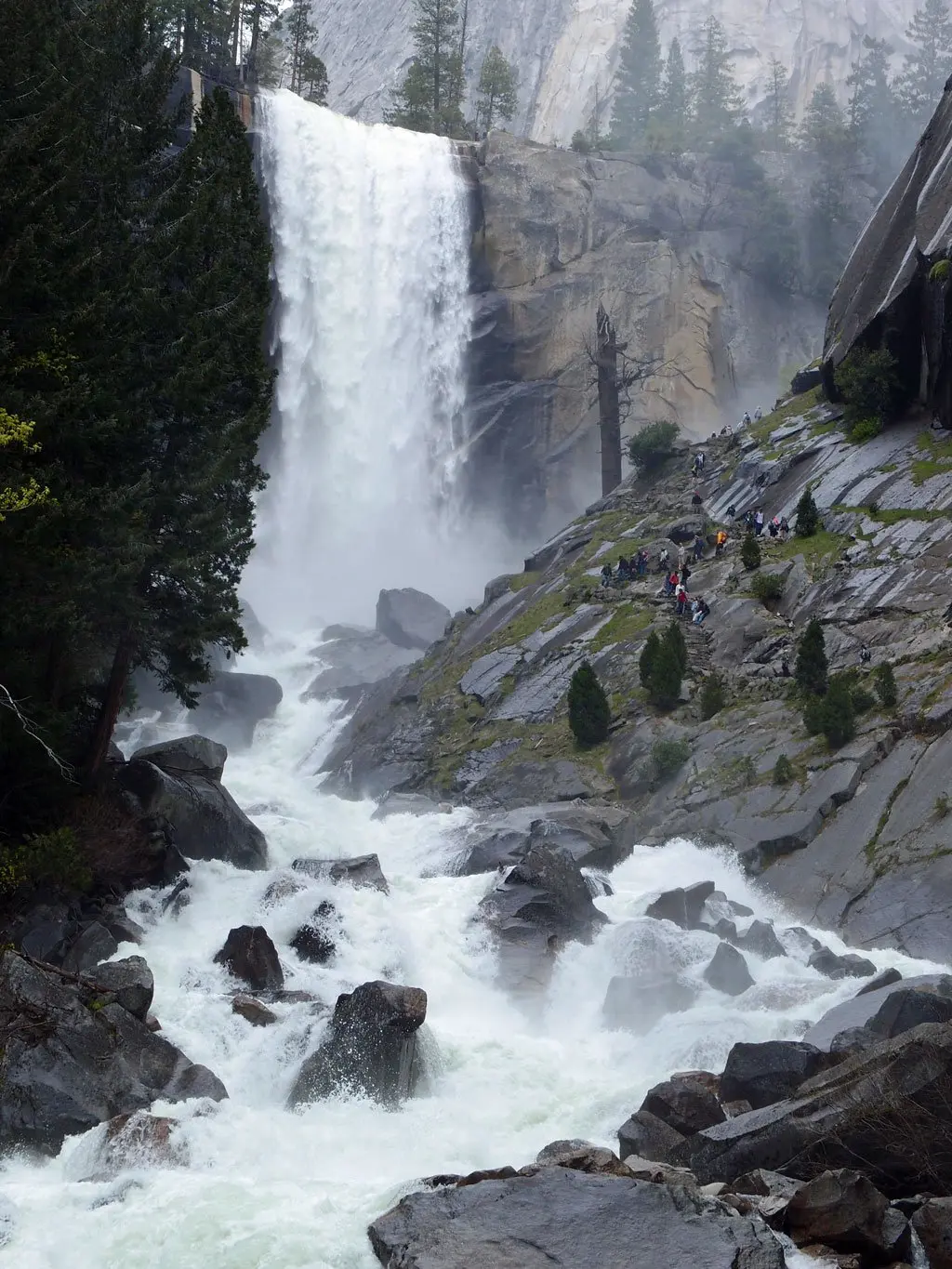
The Mist Trail is Yosemite's busiest hike for good reason: it puts you right in the throat of two of the park's signature waterfalls. You'll climb granite steps carved into the cliffside, get soaked in waterfall spray, and earn views that justify the crowds and the effort.
Trail Details
- 🏃Activities
- Hiking
- 📊Difficulty
- Moderate
- 🔁Trail Type
- out and back
- 📏Distance
- 5.4 miles
- ⬆️Elevation Gain
- 1,000 ft
- ⬇️Elevation Loss
- 1,000 ft
- 🏔️Highest Point
- 5,044 ft
- 🚩Trailhead Elev.
- 4,035 ft
- 🪨Surface
- Granite steps, paved and rocky
- 🌤️Best Seasons
- spring, summer, fall
- 📍Location
- Yosemite Valley, CA
- 🐕Dogs Allowed
- No
- 💵Fee
- Free
- 💧Water Available
- Yes
Overview
This trail delivers the classic Valley waterfall experience through sheer physical commitment. The route follows the Merced River upstream, first to Vernal Fall's footbridge for a warm-up view, then up 600-plus granite steps carved directly into the cliff face beside the 317-foot Vernal Fall. The mist that gives the trail its name isn't metaphorical — expect to get drenched during peak flow periods.
The trail continues beyond Vernal Fall to Nevada Fall, a 594-foot drop that's less dramatic up close but offers better views back toward Half Dome. Most hikers turn around at Vernal Fall, but the additional 1.3 miles to Nevada Fall adds perspective and cuts down on crowds.
What to Expect
The first mile to the footbridge is standard Valley floor hiking — paved path through mixed forest with the sound of rushing water growing louder. At the bridge, you get your first real look at Vernal Fall and can decide whether to continue.
The granite staircase beyond the footbridge is where things get serious. These aren't gentle switchbacks; they're steep stone steps that climb directly beside the waterfall. In spring and early summer, the spray will soak you and make the granite slippery. Bring a rain jacket or embrace getting wet.
From the top of Vernal Fall, the character changes. The trail levels out somewhat as it follows the river to Nevada Fall. This section sees fewer hikers and offers different views of the Valley floor and surrounding peaks.
The John Muir Trail provides an alternate route for the return trip, creating a semi-loop that's slightly longer but easier on the knees. It also stays open in winter when the Mist Trail proper closes due to ice hazards.
Tips & Logistics
Start early. This is the second-most traveled trail in the entire National Park Service, seeing over 5,000 hikers per day during peak season. Some sections narrow to three feet wide with insufficient room for safe passing.
Access is via Happy Isles shuttle stop (#16) — there's no parking at the trailhead. The closest parking is at Curry Village, about a mile away. The shuttle system eliminates car hassles but adds timing considerations during busy periods.
Water is available at the trailhead and at the Vernal Fall footbridge, but only from May to October. Restrooms follow the same seasonal schedule. Plan accordingly if visiting outside this window.
Peak waterfall flow runs from April through June, extending into July after heavy snow years. This is when the mist is most intense and the waterfalls most impressive, but also when conditions are wettest and most slippery. Fall offers drier conditions and thinner crowds, though the waterfalls carry less volume.
Winter brings seasonal closures. The Mist Trail to Vernal Fall closes due to falling ice and rock hazards, though Nevada Fall remains accessible via the John Muir Trail. Check current conditions before heading out.
The granite can be unforgiving when wet. Proper footwear with good traction is essential, especially during peak flow periods. Rails and warning signs mark the most dangerous areas — respect them. The park sees regular water-related fatalities, often involving people who venture beyond established safety barriers.