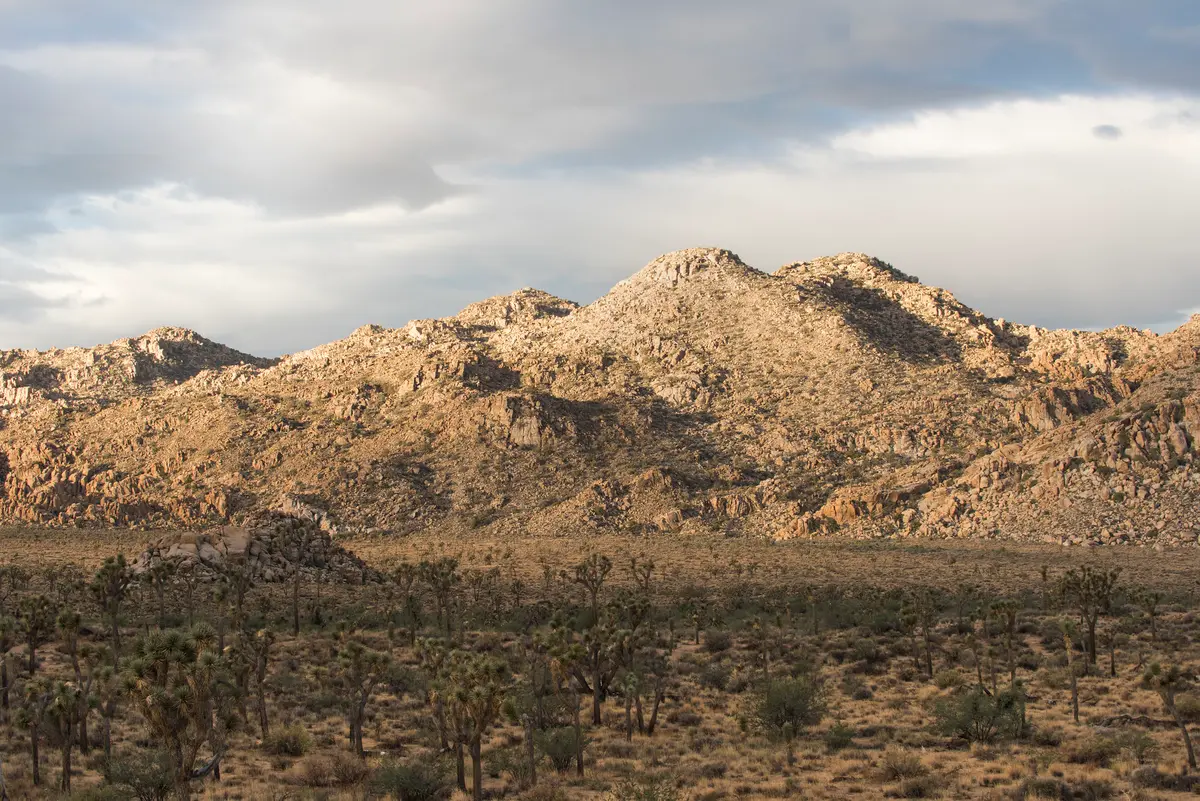
The Minerva Hoyt Trail offers an easy introduction to Joshua Tree's Mojave Desert ecosystem without the commitment of a backcountry slog. This 3-mile walk follows an old road through classic Joshua tree habitat to Hidden Valley's picnic area, where you can extend the adventure with the nature trail or simply enjoy lunch among the rock formations.
Trail Details
- 🏃Activities
- Hiking
- 🔁Trail Type
- out and back
- 📏Distance
- 3 miles
- ⬆️Elevation Gain
- 100 ft
- 🪨Surface
- dirt
- 🌤️Best Seasons
- december, january, february, march, april, may, september, october, november
- 📍Location
- CA
- 🐕Dogs Allowed
- No
- 💵Fee
- Free
Overview
This is Joshua Tree's friendliest desert walk. The trail starts at Hidden Valley's far parking lot and meanders through open Joshua tree woodland on what was once a vehicle route. The terrain stays gentle — just 100 feet of elevation gain spread across the distance — making it accessible for families while still delivering the quintessential Mojave experience.
The route cuts through a valley flanked by the park's signature monzogranite formations. Joshua trees dot the sandy flats in their peculiar, Dr. Seuss arrangements, and the distant mountains provide a dramatic backdrop. It's not wilderness in the technical sense, ending at a developed picnic area, but the walk itself feels removed from the park's busier corridors.
What to Expect
The trailhead sits at the far end of Hidden Valley's parking lot, marked by a standard park service sign. From there, you'll follow the remnants of an old road as it curves through the desert. The surface is packed dirt and sand — easy walking, though you'll want to watch for the occasional loose rock.
The trail takes a sharp right turn partway through, leaving the old roadbed to head more directly toward Hidden Valley. This section offers some of the best views of the surrounding rock piles and distant peaks. Joshua trees thin out and thicken again as you move through different microzones within the desert ecosystem.
The destination is Hidden Valley's picnic area, complete with tables and restrooms. From here, you can add the 1-mile Hidden Valley Nature Trail to create a 4-mile loop that explores the famous "hidden valley" enclosed by rock walls — a worthwhile addition if you have the time and energy.
Tips & Logistics
Timing matters in the desert. October through April offers the most comfortable walking temperatures, while summer hiking means predawn starts or accepting some genuine heat. Spring can bring wildflower displays after wet winters, though Joshua Tree's blooms are never as reliable as those in lower desert areas.
Parking at Hidden Valley fills up, especially on weekends during peak season. Arrive early or consider this as an afternoon hike when day visitors start leaving. The $30 park entry fee covers seven days — useful if you're planning multiple visits.
Water is essential even on this short route. The desert's dry air and sun can dehydrate you faster than expected, particularly if you're coming from a more humid climate. A hat and sunscreen are non-negotiable year-round.
Dogs aren't allowed on the trail, with the standard national park exception for service animals on leash. The restriction makes sense — desert conditions are tough on paws, and the ecosystem is fragile.
The trail works well as a warm-up for longer Joshua Tree adventures or as a standalone introduction to Mojave Desert hiking. It's also a solid fallback when wind or weather makes the higher-elevation areas less appealing. The combination with Hidden Valley Nature Trail gives you a good half-day in one of the park's most accessible and photogenic areas.