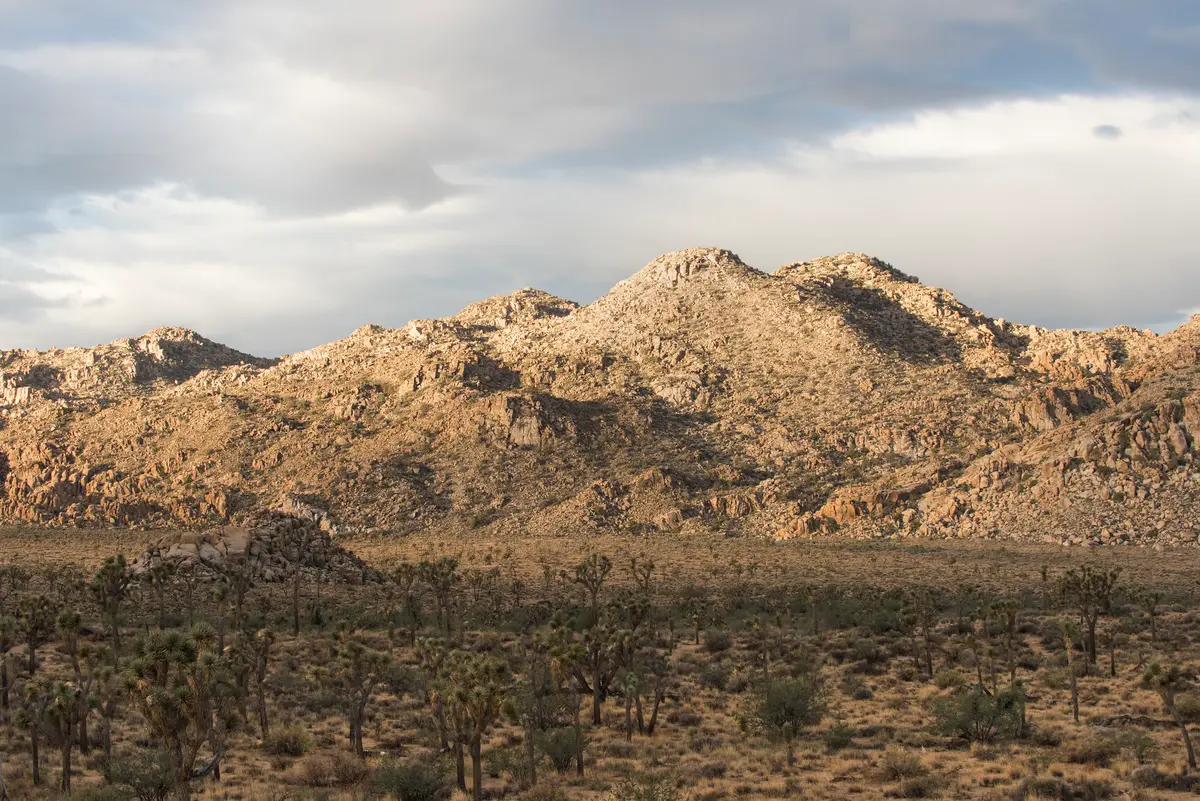
The Minerva Hoyt Trail offers something rare in Joshua Tree: an easy desert walk that actually goes somewhere. This 3-mile out-and-back connects the main park road to Hidden Valley via an old service route, trading the usual interpretive loop for a proper point-to-point hike through classic high desert terrain.
Trail Details
- 🏃Activities
- Hiking
- 🔁Trail Type
- out and back
- 📏Distance
- 3 miles
- ⬆️Elevation Gain
- 100 ft
- 📍Location
- CA
- 🐕Dogs Allowed
- No
- 💵Fee
- Free
Overview
The trail follows what was once a park service road before cutting through Joshua tree woodland toward Hidden Valley. Unlike most Joshua Tree walks, which circle back to where you started, this route delivers you to a different destination — the Hidden Valley picnic area, tucked into a natural amphitheater of granite domes.
The 100 feet of elevation gain is barely noticeable, spread across terrain that rolls gently through the transition zone between the park's developed areas and its wilder sections. Joshua trees dominate the landscape here, their twisted arms creating that signature Mojave Desert silhouette against jumbled granite formations.
For families or anyone looking to sample Joshua Tree's backcountry character without committing to serious desert hiking, this trail hits the sweet spot. It's long enough to feel like a real hike but gentle enough for most fitness levels.
What to Expect
The path starts as an obvious old roadbed, making navigation straightforward. About halfway through, the trail takes a sharp right turn toward Hidden Valley — watch for this junction to stay on route. The surface is mostly packed dirt with some rocky sections, nothing that requires special footwear beyond sturdy hiking shoes.
Joshua trees provide scattered shade, though not enough to rely on during midday sun. The granite boulder piles that make this area famous for rock climbing create natural landmarks as you walk, helping with orientation in terrain that can look repetitive to newcomers.
Once you reach Hidden Valley, you can turn around for a simple out-and-back, or extend the adventure by picking up the 1-mile Hidden Valley Nature Trail. This creates a 4-mile "lollipop" loop that adds interpretive stops and a closer look at the valley's unique ecosystem.
Tips & Logistics
Early morning and late afternoon work best, especially October through April when temperatures stay reasonable. Summer hiking is possible but requires starting at dawn. The lack of significant elevation gain means conditions stay fairly consistent throughout the route.
Parking is at the trailhead along the main park road. Like most Joshua Tree trails, this one gets busy during peak season (winter and spring), so arrive early to secure a spot.
Water is essential — carry at least a liter per person, more in warm weather. The desert's dry air and constant sun dehydrate you faster than you expect, even on short hikes.
The $30 park entrance fee covers seven days and gets you access to the entire park. Service animals are welcome on this trail but must stay on a 6-foot leash; pets and emotional support animals aren't permitted.
Navigation is straightforward, but carrying a park map helps identify the granite formations and other landmarks you'll see along the way. The trail's gentle character makes it ideal for testing desert hiking gear or breaking in new boots before tackling Joshua Tree's more demanding backcountry routes.