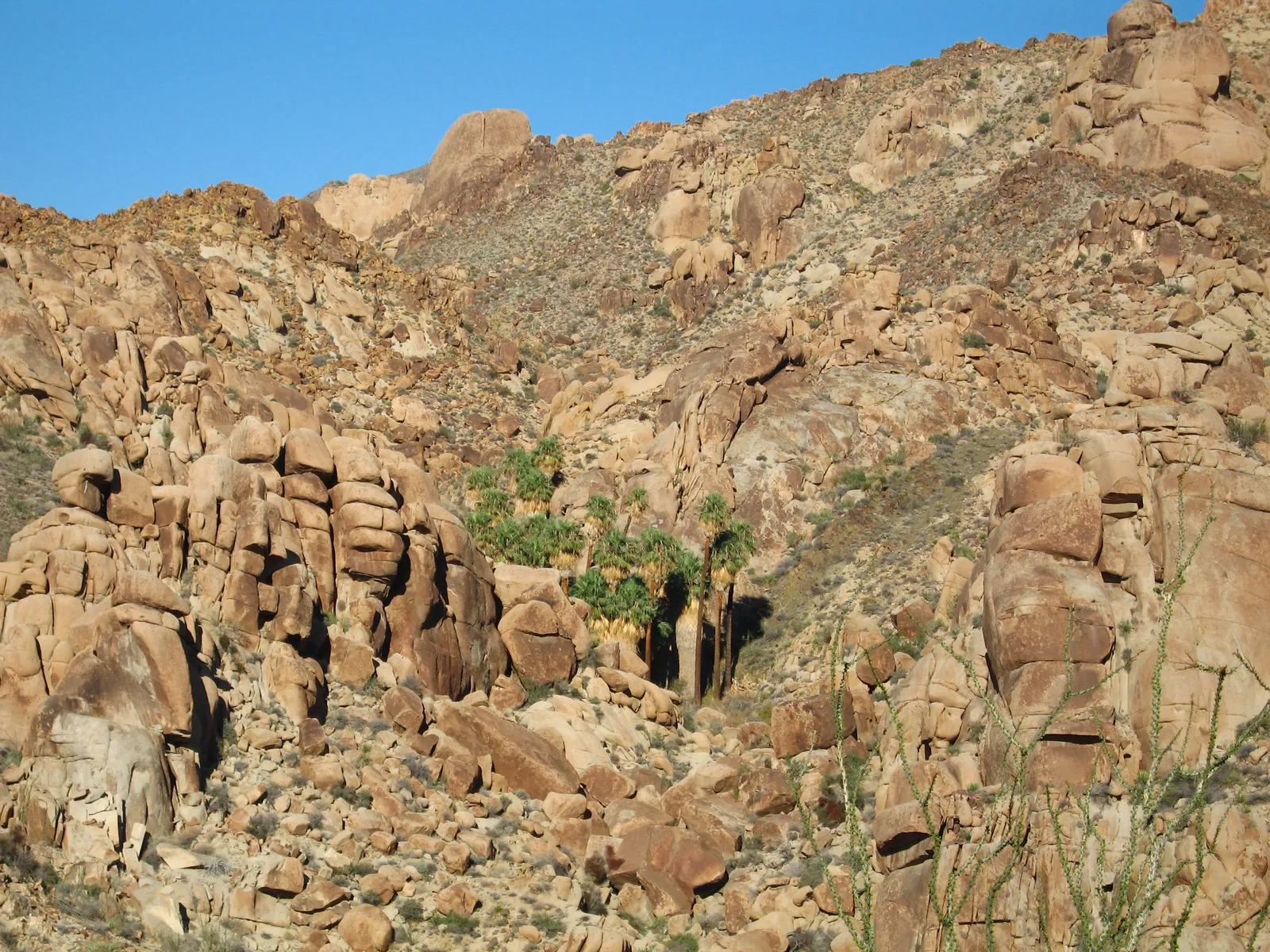
Lost Palms Oasis hides the park's largest grove of California fan palms in a remote canyon that most visitors never see. This 7.5-mile desert trek trades the familiar Joshua trees and granite domes for creosote flats and a surprising finale: a scramble into a hidden canyon where desert springs feed towering palms. It's one of five oases in the park, but the only one that demands real commitment to reach.
Trail Details
- 🏃Activities
- Hiking
- 📊Difficulty
- Hard
- 🔁Trail Type
- out and back
- 📏Distance
- 7.5 miles
- ⬆️Elevation Gain
- 500 ft
- 🪨Surface
- dirt, sand, and rock
- 🌤️Best Seasons
- october, november, december, january, february, march, april, may
- 📍Location
- CA
- 🐕Dogs Allowed
- No
- 💵Fee
- Free
Overview
Starting from Cottonwood Spring in the park's southeastern corner, this trail cuts across the Colorado Desert's spare landscape — rolling hills of creosote, ocotillo, and cholla where the silence runs deep. For most of the route, you're walking through classic low desert: sandy washes, scattered desert plants, and long views across Pinto Basin. The drama builds slowly, then all at once when you reach the canyon rim and see palms rising from a hidden cleft in the earth.
The oasis itself sits in a different world. California fan palms cluster around seeps and springs, their fronds creating actual shade in a landscape that offers none. Wildlife concentrates here — birds, bighorn sheep, and desert creatures that depend on this rare water source. Getting down to the palms requires scrambling over rock and navigating steep, rocky steps. The climb back out is the trail's most strenuous section.
What to Expect
The first 2 miles roll across desert flats on maintained trail. You'll pass the junction with the Mastodon Peak Loop at 0.7 miles and hit mile markers at 1 and 2 miles. The Park Service marks the route with signs and blocks side trails with stones, but navigation is straightforward across this open terrain.
After the 2-mile marker, the character changes. The trail gets rougher, winding through what amounts to a mini slot canyon before reaching the rim of Lost Palms Canyon. Here's where the real work begins: steep rocky steps lead down into the canyon, and reaching the oasis itself requires scrambling over boulders and rock ledges. The route down isn't technically difficult, but it's exposed and demands attention.
The oasis spreads through the canyon bottom — dozens of mature fan palms creating a microclimate that feels like a different planet. Desert springs keep the palms alive year-round, and the contrast with the surrounding desert is stark. This is protected bighorn sheep habitat, which explains why backcountry camping isn't allowed in this section.
Tips & Logistics
October through April are the only reasonable months to attempt this hike. Summer temperatures in the Colorado Desert regularly exceed 110°F, and there's virtually no shade on the entire route. Even in winter, carry more water than you think you need — a gallon per person is conservative, not excessive.
The trailhead sits at the Cottonwood Spring parking area, which also serves Mastodon Peak hikers. No restrooms at the trailhead itself, but the Cottonwood Visitor Center is nearby. Plan 4-6 hours for the full trip — the scramble into the oasis and the climb back out take longer than the mileage suggests.
Dogs aren't permitted on this trail, and the terrain wouldn't suit them anyway. The rocky scramble at the end requires hands-free movement. Bring sun protection and sturdy footwear — the final approach to the oasis involves real rock scrambling, not just hiking.
The payoff justifies the effort. Standing among those palms in their hidden canyon, surrounded by desert silence, you understand why desert travelers have always sought out these rare havens. It's a different side of Joshua Tree, one that requires earning.