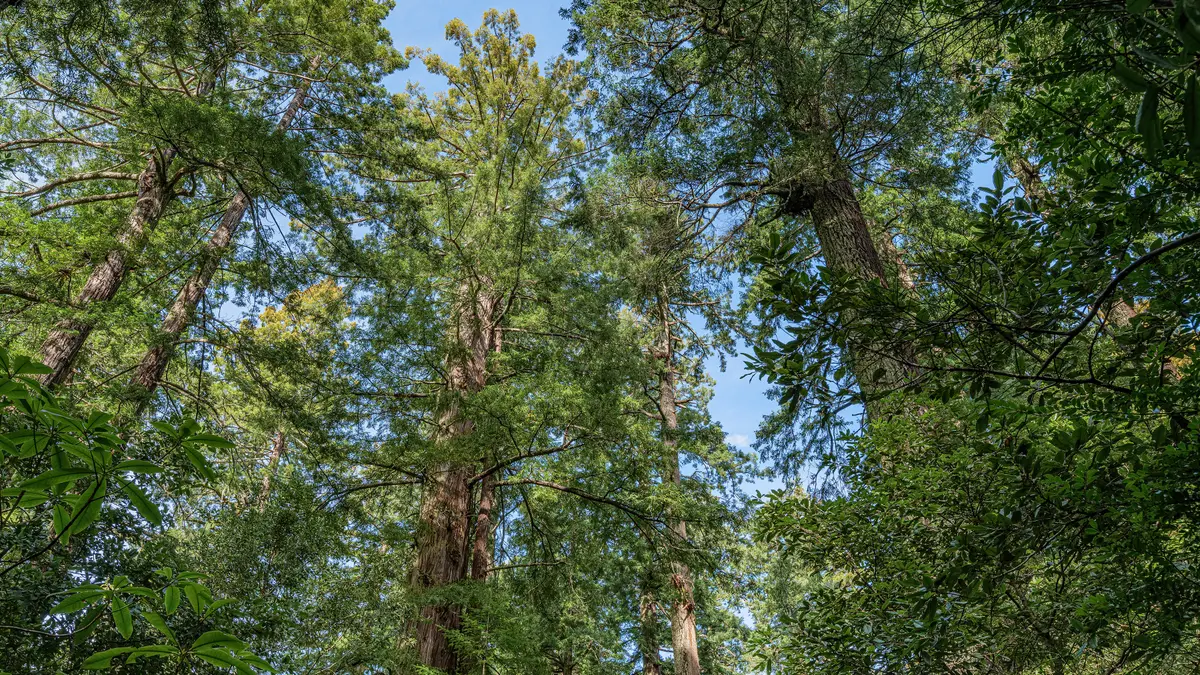
Lady Bird Johnson Grove Trail serves up redwood immersion without the crowds that pack the roadside groves. This 1.5-mile loop climbs gently through an upland forest where hollow giants tell the story of centuries of fire survival, and the interpretive stops actually teach you something worth knowing.
Trail Details
- 🏃Activities
- Hiking
- 🔁Trail Type
- out and back
- 📏Distance
- 1.5 miles
- 📍Location
- CA
- 🐕Dogs Allowed
- No
- 💵Fee
- Free
Overview
The trail winds through a mixed forest of redwoods and other tall conifers, taking you away from Highway 101's tourist circus into quieter old growth. Stop #3 focuses on fire survivors — the hollow redwoods that look like they should have died decades ago but keep growing anyway. Despite the North Coast's reputation for dampness, these forests burn occasionally, and the fires clear ground cover while scarring trees as high as 100 feet above their bases. The redwoods survive because their bark lacks the volatile resins found in pines and firs, and their sap is largely water. Fire can burn repeatedly into the heartwood through bark cracks, but the growing layers on the outside stay intact. The damaged heartwood eventually decays, creating hollows that wildlife uses for shelter.
The dedication plaque for Lady Bird Johnson Grove sits about half a mile down the trail — a reminder that this grove was set aside in 1969 to honor the First Lady's conservation work. In summer, daily ranger-led walks start from the parking lot if you want the full interpretive experience.
Getting There
The trailhead sits 3 miles up Bald Hills Road, accessed from Highway 101 about a mile north of Orick. The road is narrow and winding with almost no pull-outs, so don't attempt it with an RV, bus, or anything towing a trailer. The park service means this — there's nowhere to turn around once you commit.
Parking at the trailhead is limited, and oversized vehicles aren't allowed in the lot. Don't park on Bald Hills Road itself. There's one van-accessible parking space with striped access aisles for those who need it.
What to Expect
The loop gains just 101 feet over its 1.5 miles, making it one of the gentler redwood experiences. Most sections are at 5 percent grade or less, though you'll hit some steeper pitches. The trail surface alternates between natural dirt and wooden bridges with railings, typically staying at least 6 feet wide.
There's a hikers' bridge with a slope that prevents official wheelchair accessibility, despite the otherwise gentle terrain. The trail stays mostly shaded under the canopy, with that particular quality of light that filters down through 200-foot trees.
Timing & Conditions
The trail stays open year-round, but spring and fall offer the best conditions. Summer brings the ranger walks and clearer weather, but also the heaviest visitation. Winter means fewer people and the chance to see the forest in its natural wet-season state, when the moisture that keeps these trees alive is most apparent.
Dogs aren't allowed on this trail — standard policy for the interpretive routes in the parks. The no-pets rule helps protect both wildlife and the experience for other visitors trying to spot the animals that use those hollow trees for shelter.
Plan about 30-45 minutes for the loop if you're moving at a reasonable pace and stopping to read the interpretive signs. The trail isn't technically challenging, but the point isn't to knock it out quickly. This is one of the spots where slowing down and paying attention to what the signs are telling you about fire ecology and tree survival actually enhances what you're seeing in the forest around you.