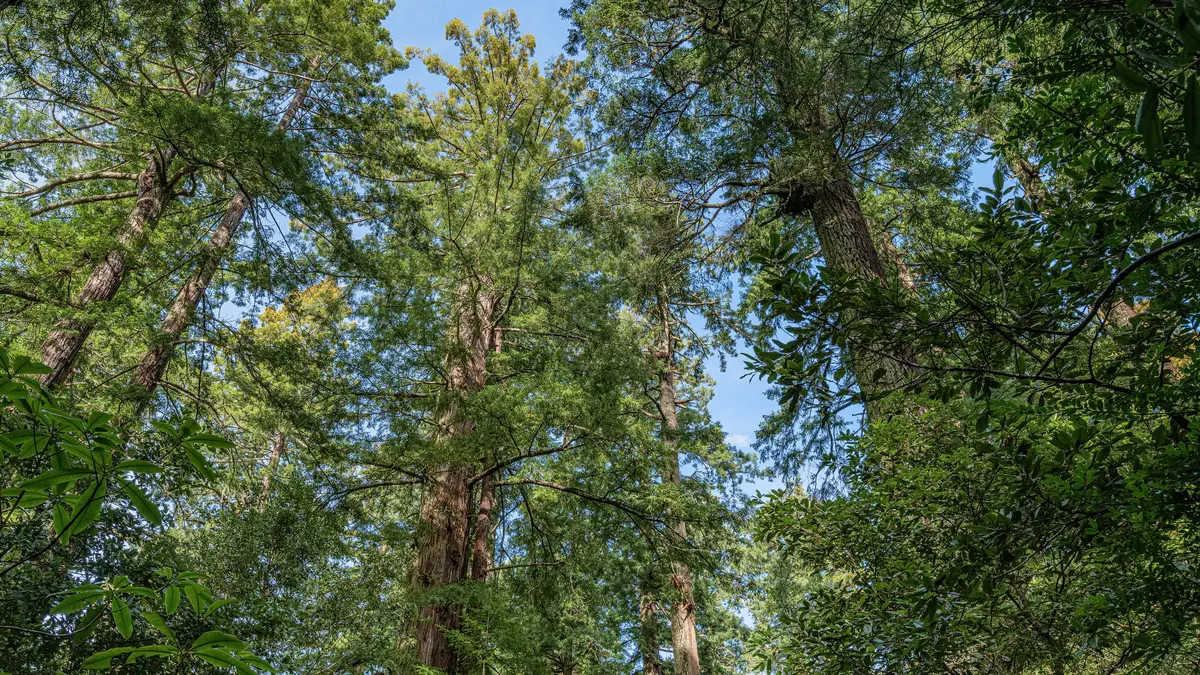
Stop #2 on the Lady Bird Johnson Nature Trail puts you face-to-face with redwood cloning in action — tight clusters of trees sprouting from ancient root systems that have been waiting centuries for the right moment to regenerate. This 1.5-mile loop through upland grove offers a quieter alternative to the crowded roadside groves, with interpretive stops that explain how these trees actually manage to live for two millennia.
Trail Details
- 🏃Activities
- Hiking
- 🔁Trail Type
- out and back
- 📏Distance
- 1.5 miles
- 📍Location
- CA
- 🐕Dogs Allowed
- No
- 💵Fee
- Free
Overview
The Lady Bird Johnson Nature Trail winds through old-growth redwood forest three miles up Bald Hills Road from Highway 101, placing you in a grove where most trees are 600-800 years old. Stop #2 showcases one of the coast redwood's most remarkable survival strategies: cloning through reiterations. While redwood seedlings rarely survive in the forest floor's dim light, the species persists through root collar burls — massive clusters of dormant bud material that can explode into new growth when triggered by fire or drought stress.
The trail itself is relatively modest by redwood standards. These upland trees are smaller than the giants you'll find in the creek bottoms, but that scale makes the cloning phenomenon more visible. You can walk around the tight clusters and actually see how new trees emerge from the swollen knobs beneath the bark of their parents.
What to Expect
The 1.5-mile loop stays mostly level with just 101 feet of elevation gain, making it accessible to most hikers. The trail surface varies between natural dirt paths and wooden bridges with railings, typically maintaining a gentle grade of 5% or less. One hikers' bridge does have a slope that prevents official wheelchair accessibility, but the trail is otherwise well-maintained and wide.
The forest here sits at roughly 1,000 feet above sea level, which means different growing conditions than the fog-belt groves closer to the ocean. The trees are still impressive — we're talking centuries-old coast redwoods — but the canopy is more open and the undergrowth more varied. This makes it easier to see the forest's structure and understand the interpretive information at each stop.
Plan for 30-60 minutes to complete the full loop, depending on how much time you spend at the numbered stops. The trail's interpretive focus means it's designed for contemplation rather than cardio.
Tips & Logistics
Bald Hills Road is the main challenge here. The three-mile drive from Highway 101 follows a narrow, winding route with very few pullouts or places to turn around. The park explicitly warns against bringing RVs, buses, or any vehicle towing a trailer. Even in a standard car, take it slow and be prepared to back up if you meet oncoming traffic on a narrow section.
Parking at the trailhead includes one van-accessible space and restrooms, but the lot is small. Summer brings daily ranger-led walks that start from the parking area, which can mean more crowding during peak season. Early morning or late afternoon visits tend to be quieter.
The trail is free, and dogs aren't allowed. Flowers and plants are protected by federal law, so the usual leave-no-trace rules apply with extra emphasis. The park takes vegetation protection seriously in these old-growth areas.
Weather rarely creates major issues on this low-elevation loop, but the coastal climate means it can be damp and cool even in summer. A light jacket is usually smart, and the wooden bridge sections can be slippery when wet. The forest provides natural shade, so sun protection is less critical than on exposed ridgeline hikes.
Consider combining this trail with a visit to the Lady Bird Johnson Grove dedication plaque, located about half a mile down the main trail from the parking area.