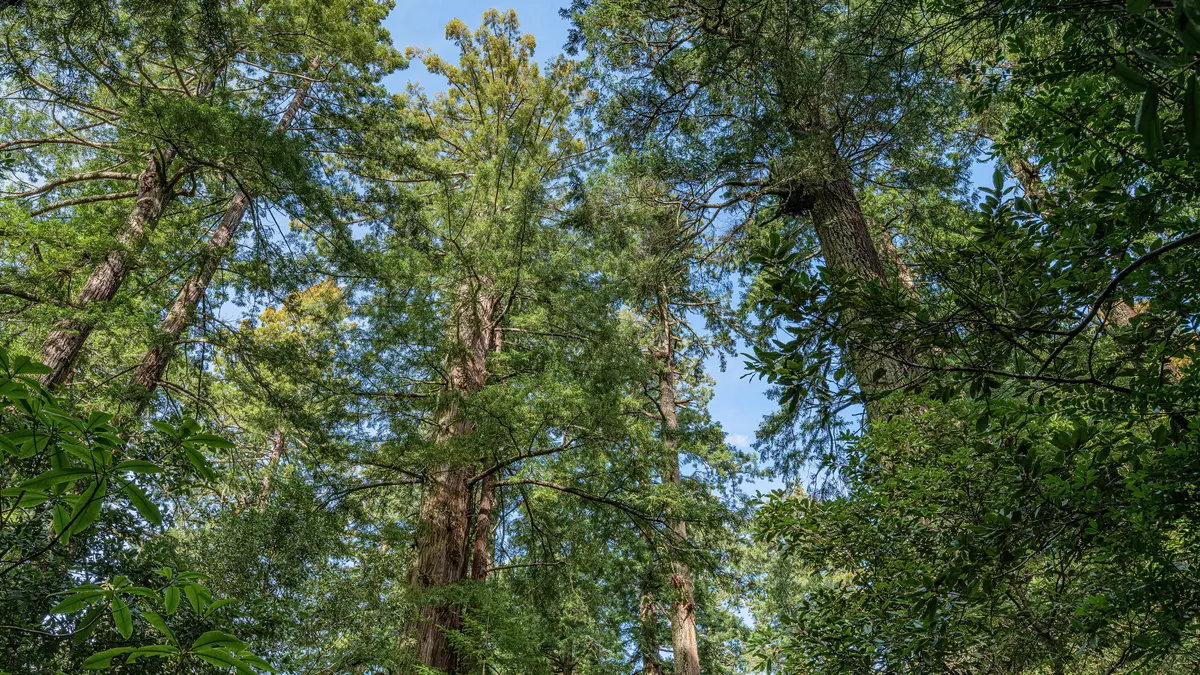
This 1.5-mile loop cuts straight to what people come to the redwoods for: walking among trees that have been growing since before the Roman Empire. The trail sits 1,000 feet above sea level on a ridge above Orick, where old-growth giants that escaped all logging create the kind of cathedral quiet that makes you lower your voice without thinking about it.
Trail Details
- 🏃Activities
- Hiking
- 🔁Trail Type
- out and back
- 📏Distance
- 1.5 miles
- 📍Location
- CA
- 🐕Dogs Allowed
- No
- 💵Fee
- Free
Overview
The Lady Bird Johnson Grove delivers on the redwood experience without requiring a multi-day commitment or backcountry permits. After crossing a hikers' bridge early in the loop, you enter forest that has never seen a saw — these trees were already ancient when Spanish explorers first glimpsed the California coast.
The trail stays gentle throughout, with only 101 feet of total elevation gain spread across the entire loop. Most gradients clock in at 5% or less, though a few steeper sections will remind you that you're walking ridgeline terrain. The surface alternates between natural dirt trail and wooden boardwalks with railings, consistently maintaining at least 6 feet of width.
Under the dense canopy, light filters down in scattered patches where redwood seedlings grow beneath their towering ancestors. The forest floor stays relatively clear — old-growth redwoods create conditions that favor their own regeneration while limiting undergrowth.
What to Expect
The experience begins before you reach the trailhead. Most of the trees around the parking area are second-growth Douglas-fir, a reminder of what this landscape looked like after decades of logging elsewhere in the region. The contrast becomes stark once you cross that initial bridge and enter the preserved grove.
About halfway through the loop, you'll encounter the dedication plaque honoring Lady Bird Johnson, installed after President Nixon dedicated this grove to the former First Lady in 1969 for her conservation work. The plaque provides a natural rest stop and historical context for the preservation efforts that saved these particular trees.
The trail maintains its gentle character throughout, making it accessible to families and hikers who might struggle with more demanding terrain. However, the initial hikers' bridge includes a slope that prevents official wheelchair accessibility, despite the otherwise accommodating trail design.
Tips & Logistics
Getting to the trailhead requires a three-mile drive up Bald Hills Road, which turns right off Highway 101 about one mile north of Orick. The road is narrow and winding with minimal pull-outs, so drive cautiously and be prepared to back up if you meet oncoming traffic at a tight spot.
Do not attempt this access road with an RV, bus, or any vehicle towing a trailer. The road geometry simply won't accommodate larger rigs, and there's nowhere to turn around if you get stuck. The parking lot reinforces this limitation — space is limited, and overflow parking along Bald Hills Road is prohibited.
The lot includes restrooms and one designated van-accessible parking space, though demand can exceed supply during peak summer weekends and fall color season. Plan to arrive early or consider visiting on weekdays when possible.
Dogs are prohibited on this trail, consistent with national park regulations designed to protect wildlife and vegetation. Speaking of vegetation, resist any urge to pick wildflowers or grab redwood foliage as souvenirs — everything here is protected by federal law.
The trail stays open year-round, but winter visits come with the standard North Coast caveats: expect mud, potential trail debris from winter storms, and limited daylight hours. Summer and early fall provide the most reliable conditions, though fog can roll in without warning and transform the forest atmosphere completely.
Allow 30 minutes to an hour for the full loop, depending on how long you spend absorbing the scale of these trees and reading interpretive information along the way.