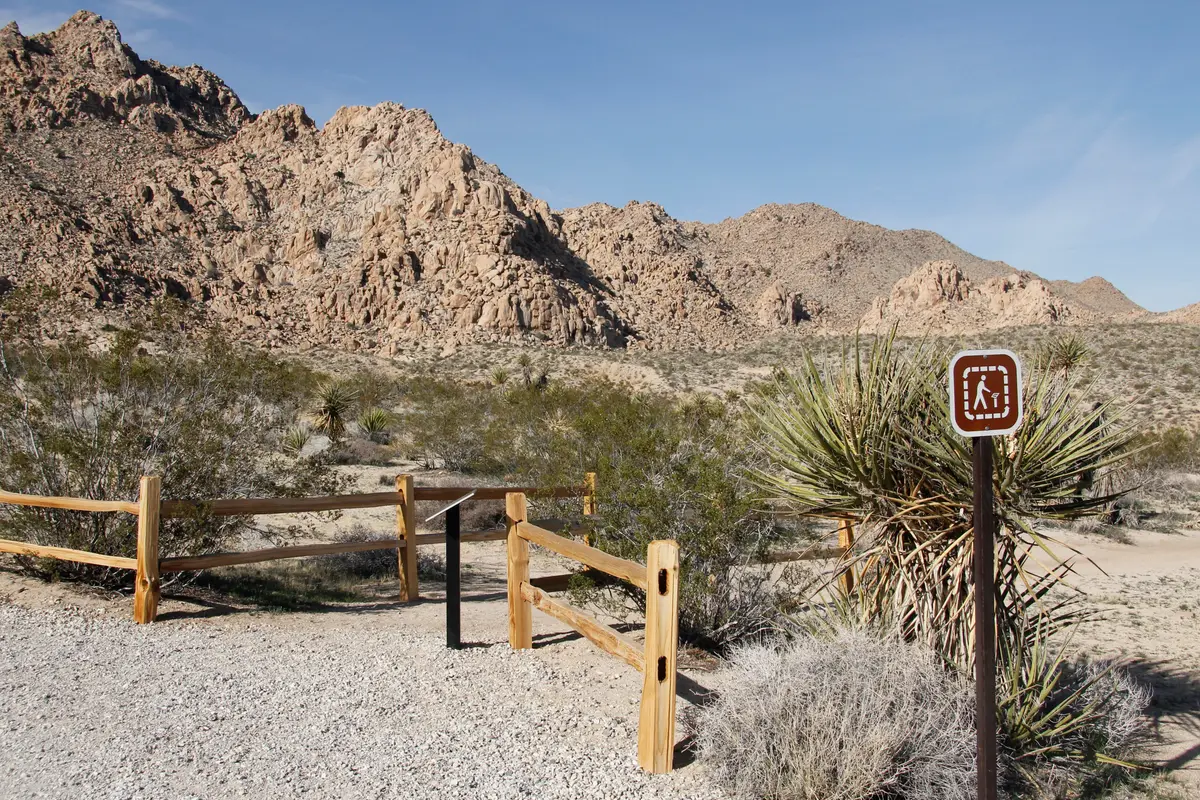
Indian Cove Trail serves as Joshua Tree's gentle introduction to desert hiking — a half-mile loop that packs desert ecology lessons into a manageable walk. Located in the park's northern section with its own entrance off Highway 62, it's the trail families choose when they want to stretch their legs without committing to serious desert navigation.
Trail Details
- 🏃Activities
- Hiking
- 📊Difficulty
- Easy
- 🔁Trail Type
- loop
- 📏Distance
- 0.6 miles
- ⬆️Elevation Gain
- 50 ft
- 🪨Surface
- soft sand
- 🌤️Best Seasons
- january, february, march, april, may, june, july, august, september, october, november, december
- 📍Location
- CA
- 🐕Dogs Allowed
- No
- 💵Fee
- Free
Overview
This is desert hiking with training wheels on. The 0.6-mile loop starts at the west end of Indian Cove Campground and makes a modest 50-foot climb through classic Mojave Desert terrain. You'll walk among creosote bush, cholla, and desert willow while interpretive panels explain how indigenous peoples used these plants for food, medicine, and tools.
The trail follows a mix of established path and sandy wash bottom, giving you a taste of different desert walking surfaces without any real navigation challenges. It's wide enough — roughly 1.5 to 3 feet — that you won't be bushwhacking through spiny vegetation, though the soft sand sections will remind your calves they're working.
What to Expect
The route starts on relatively firm ground before dropping into a wash where the trail continues up the dry creek bed. This isn't technical scrambling, just walking on sand and small rocks where flash floods have carved their channel. A few constructed stairs help with the modest elevation changes.
Don't expect shade or cell service. The desert doesn't offer either, and this trail stays true to that character. After winter rains, the route can produce a decent wildflower display in spring, though timing depends entirely on precipitation patterns that vary wildly year to year.
The interpretive panels scattered along the way focus on ethnobotany — how the Chemehuevi, Serrano, and other tribes utilized desert plants. It's more educational than most nature trails, assuming you take time to read rather than just walk past.
Tips & Logistics
Indian Cove operates on its own schedule, separate from the main park. The campground and trail close during summer months when temperatures regularly exceed 100°F. Even when open, summer hiking here means starting before 9 AM and carrying at least a liter of water per person for this short distance — desert dehydration happens faster than most people expect.
Access requires a slight detour. From the park's north entrance, exit and drive left on Highway 62 for 6.8 miles through Twentynine Palms, then south on Indian Cove Road for 3 miles past a ranger station to reach the campground. The road narrows enough to restrict vehicles over 25 feet.
The standard park entrance fee applies, though there's no additional activity fee for the trail itself. Dogs aren't allowed, but service animals are permitted.
For families or anyone wanting a desert sampler without commitment, this works well. Experienced hikers might find it too tame, but it serves its purpose: letting people experience walking in sandy washes and learning desert plant identification without the navigation or endurance demands of the park's more serious routes. Plan 30 to 45 minutes if you're reading the signs; 15 minutes if you're just walking.