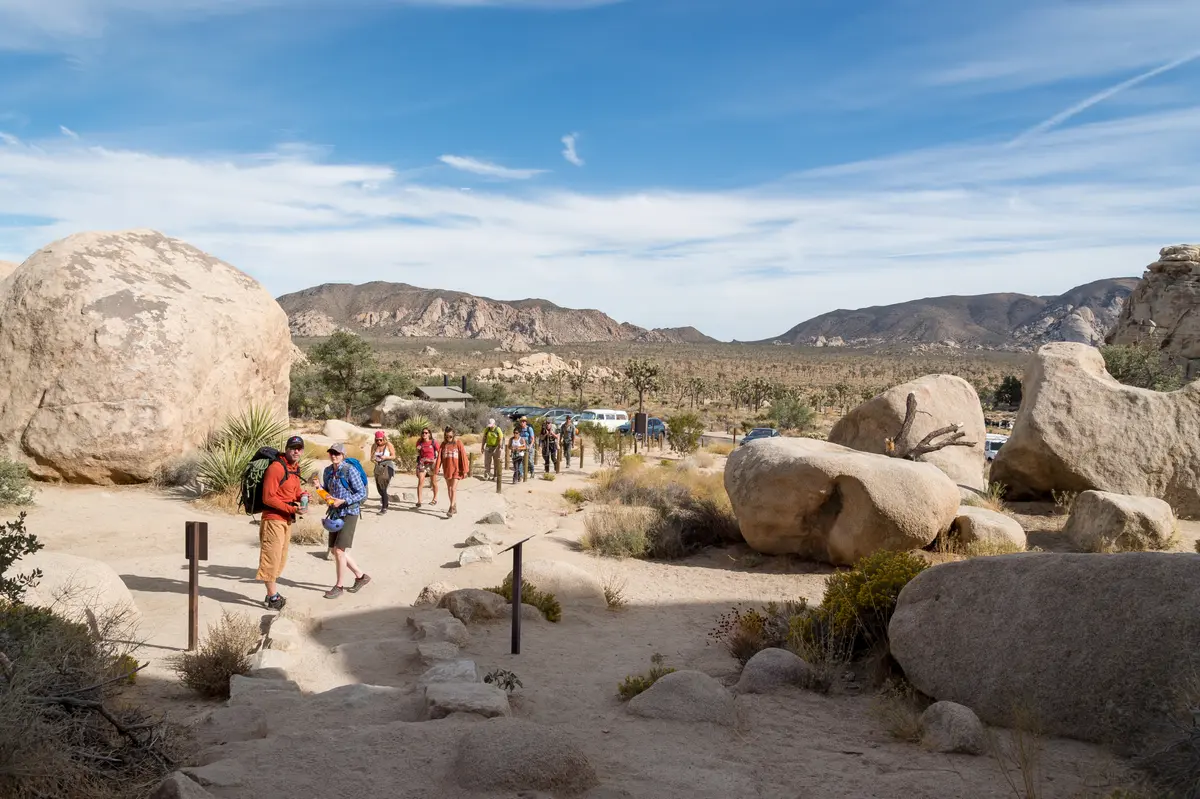
Hidden Valley Trail loops through what feels like a secret outdoor room, walled in by house-sized granite boulders that Joshua Tree's monzogranite formations do better than anywhere else. This gentle mile walk delivers the park's signature landscape without the navigation challenges of longer desert routes — making it the obvious choice for first-time visitors or anyone who wants the Joshua Tree experience without committing to a day-long adventure.
Trail Details
- 🏃Activities
- Hiking
- 📊Difficulty
- Easy
- 🔁Trail Type
- loop
- 📏Distance
- 1 miles
- ⬆️Elevation Gain
- 100 ft
- 🪨Surface
- hard pack dirt, soft sand, gravel, rocks, boulders
- 🌤️Best Seasons
- december, january, february, march, april, may, june, july, august, september, october, november
- 📍Location
- CA
- 🐕Dogs Allowed
- No
- 💵Fee
- Free
Overview
The valley earned its name honestly. Ringed by towering rock formations, this natural enclosure creates its own microclimate and sense of isolation despite sitting just off Park Boulevard. The trail traces the valley floor, weaving between Joshua trees, cholla gardens, and the massive granite outcrops that define this section of the Mojave Desert.
What makes Hidden Valley work as an introduction to Joshua Tree is the variety packed into such a short distance. You'll walk through classic high desert terrain — hard-packed sand gives way to gravel washes, then rocky sections that require some attention to foot placement. The boulder formations create natural obstacles and opportunities for scrambling, though the main trail stays on level ground.
The setting explains why cattle rustlers supposedly used this valley as a hideout in the 1930s. Once you're inside the rock walls, the outside world disappears completely. No cell service, minimal shade, and the kind of desert quiet that makes every footstep audible.
What to Expect
The trail starts with a brief climb over rock steps — the steepest part of the entire loop. From there, the path descends into the valley proper, following a well-worn route marked by small rock cairns. The surface varies from hard-packed dirt to soft sand to sections where you're stepping over and around boulders.
Educational signs along the route identify desert plants and explain the area's natural history, though the real education comes from observing how life adapts to this harsh environment. Joshua trees cluster in the sandy washes, while barrel cactus and cholla occupy the rockier ground. The contrast in plant communities across such a small area demonstrates the desert's precision in matching species to micro-environments.
The boulder formations create natural side trips for anyone inclined to explore. Rock scrambling routes branch off the main trail, though these unofficial paths require common sense and solid footing. The granite here is solid and textured — good for grip but unforgiving if you slip.
Tips & Logistics
Start early during peak season. The parking area at Hidden Valley Picnic Area fills by 10 AM on weekends and holidays, and there's no overflow parking nearby. Arriving by 9 AM guarantees a spot and avoids the worst desert heat.
No water sources exist along the trail or at the trailhead. The nearest drinking water is 14 miles away at the Joshua Tree Visitor Center, so carry what you need. Even for this short hike, desert conditions can be deceptive — bring more water than seems necessary.
The trail runs year-round, but summer temperatures make early morning starts essential. Winter offers the most comfortable hiking, with daytime temperatures in the 60s and 70s. Spring brings wildflower blooms in good rain years, though the timing varies widely based on winter precipitation.
Vault toilets and trash dumpsters are available at the trailhead, but no other services. The trail surface makes this unsuitable for strollers, and pets aren't permitted. For families with young kids, the rock steps at the beginning and end of the loop require some assistance, but the middle section is manageable for most ages.