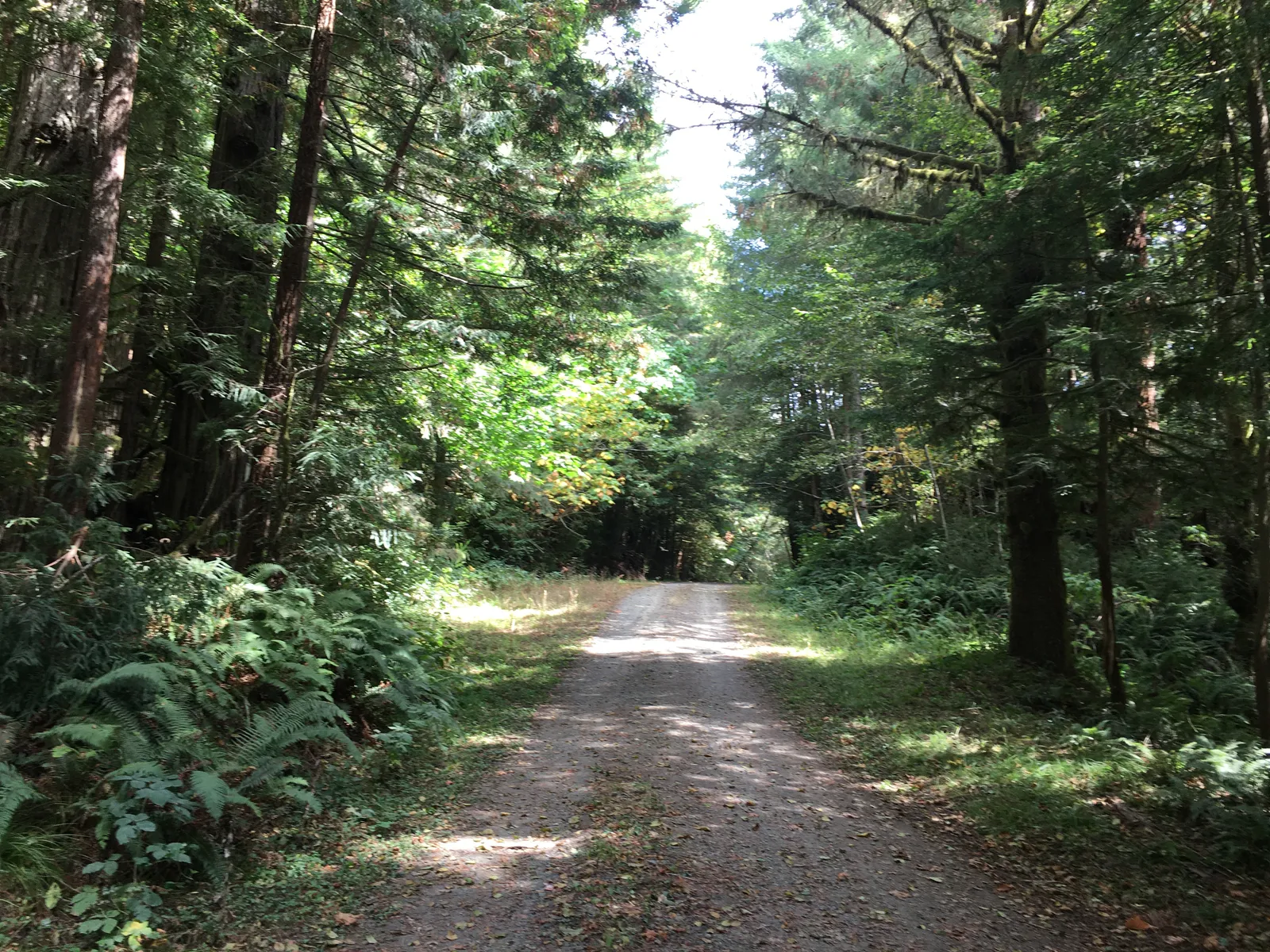
The Davison Trail cuts through a forest in recovery, following old logging roads through second-growth Douglas fir where ancient redwoods once stood. This 2.5-mile connector between Elk Meadow and Elk Prairie tells the story of what happens after the chainsaws leave — and what it takes to bring a forest back.
Trail Details
- 🏃Activities
- Hiking
- 🔁Trail Type
- point to point
- 📏Distance
- 2.5 miles
- 🪨Surface
- dirt road
- 📍Location
- CA
- 🐕Dogs Allowed
- No
- 💵Fee
- Free
Overview
Walk this route and you're traveling through a living experiment. The dense Douglas fir corridor grew back after loggers cleared the old-growth redwoods in the 1960s, and now the National Park Service is actively reshaping this landscape through the Redwoods Rising restoration project. Giant stumps punctuate groves of skinny, crowded second-growth trees — a forest learning to be a forest again.
The trail follows the path of least resistance along old logging roads, which means minimal elevation change over its 2.5-mile length. This isn't wilderness backpacking; it's more like a woodland history lesson with decent footing. You'll pass remnants of the logging operation — mill buildings slowly being reclaimed by the forest — alongside the massive stumps that hint at what was lost.
The experience is quieter than the park's popular groves along US-101. Most visitors stick to the famous spots with their named giant trees and paved loops. Here, the forest feels more working-class, less polished. The trees are still finding their spacing, still figuring out where the light falls best.
What to Expect
The route is essentially flat with just a few dozen feet of elevation change, making it accessible to most hikers. Dense canopy overhead means the trail stays relatively cool and dim, even on sunny days. The old logging infrastructure appears intermittently — concrete foundations, rusted equipment, and structures slowly disappearing under salmonberry and fern.
Those redwood stumps are the real landmarks. Some are wide enough to park a car on, cut high enough that you have to crane your neck to see the top. The second-growth Douglas firs growing around them are tall by most standards but look like matchsticks next to what came before. It's a powerful reminder of scale — both what was here and how long true recovery takes.
The trail surface is generally good since it follows old road grades, but expect some seasonal variation. Winter rains can create muddy sections, and fallen branches are common given the forest density. The Park Service maintains the route, but this isn't pavement.
Tips & Logistics
Park at Elk Meadow Day Use Area, which sits just a few hundred feet south of the trailhead and has plenty of space. The northern terminus connects to Elk Prairie, giving you options for extending the hike or arranging a pickup.
Check current conditions before heading out. The Redwoods Rising restoration work may temporarily close sections of trail — the Park Service is actively managing this forest, which sometimes means keeping hikers out while crews work. The project timeline extends through the 2020s, so closures are possible on short notice.
Bring a proper map and don't rely on phone navigation. The Park Service specifically recommends good paper maps for adventures here, and cell coverage can be spotty under the dense canopy. Stay on the developed trail to protect restoration efforts.
The route works year-round, but winter brings more downed trees and muddy conditions. Late spring through fall offers the most reliable access, though the forest's muted light and constant moisture create a distinctly coastal atmosphere regardless of season.
This trail rewards people interested in forest ecology and restoration over dramatic views or physical challenge. Come here to understand what it means to heal a landscape, one tree at a time.