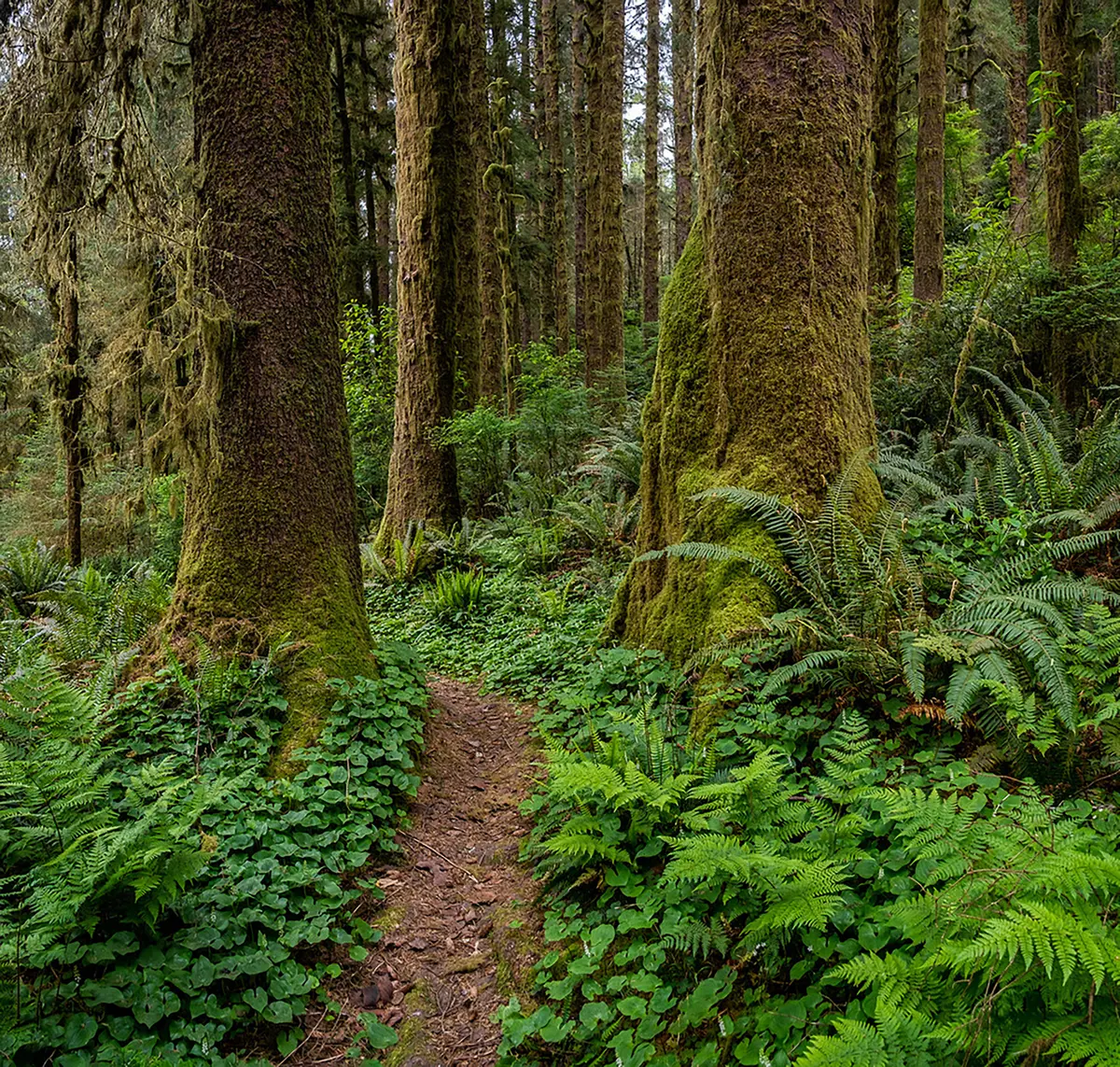
The Skunk Cabbage Trail cuts through one of the coast's intact Sitka spruce forests — stands that logging companies somehow missed. This 7.5-mile point-to-point route connects Robinson Road to Gold Bluffs Beach, crossing creek bottoms and coastal ridges with minimal redwoods but plenty of massive Douglas fir and spruce that predate European settlement.
Trail Details
- 🏃Activities
- Hiking
- 📊Difficulty
- Moderate
- 🔁Trail Type
- point to point
- 📏Distance
- 7.5 miles
- ⬆️Elevation Gain
- 500 ft
- ⬇️Elevation Loss
- 500 ft
- 📍Location
- CA
- 🐕Dogs Allowed
- No
- 💵Fee
- Free
Overview
This isn't a redwood trail, despite the park's name. The Skunk Cabbage section runs through the coastal forest zone that redwoods can't quite reach — too much salt spray, too much wind. What grows here instead are Sitka spruce and western hemlock that dwarf most eastern forests, with Douglas fir mixed in for good measure. The understory stays lush year-round: sword fern, false lily-of-the-valley, and piggyback plant carpeting the forest floor.
The trail follows old road grades for much of its length, making for easy walking through terrain that can be genuinely boggy. Skunk Cabbage Creek runs parallel to the route for the first half, and the path crosses it at least once on a proper bridge. The 500 feet of elevation change happens gradually — this isn't a lung-burner, just a steady up-and-down as the trail navigates coastal ridges.
What to Expect
From the southern Robinson Road trailhead, the route heads north through creek bottom terrain. The first mile tracks above Skunk Cabbage Creek on your right, passing several large redwoods around the 0.95-mile mark — some of the few you'll see on this trail. The bridge crossing comes at 1.2 miles, then the path moves into broader canyon bottom before hitting the main creek crossing at 1.4 miles.
The middle section climbs toward a signed viewpoint that offers a break from the forest canopy. Major Creek provides the most reliable water source along the route, though the coastal moisture means small streams and seeps are common. The northern half descends toward Gold Bluffs Beach, emerging from the spruce forest into coastal brush before hitting sand.
You'll pass redwood stumps along the way — reminders that logging reached even these marginal coastal stands. But the living Sitka spruce tell a different story. These trees survived because they were too hard to reach or too difficult to mill, and now they're some of the best examples of old-growth coastal forest left in California.
Tips & Logistics
This is a point-to-point trail, so plan your shuttle or arrange pickup at Gold Bluffs Beach. The northern trailhead sits just north of the beach entrance kiosk, while the southern access requires careful navigation off Highway 101 — look for the "Skunk Cabbage Section" sign and take the right fork of the narrow gravel road.
No permits or fees required, but parking at both trailheads fills up on summer weekends. The trail stays walkable year-round, though winter brings muddy conditions and the occasional downed tree. Spring offers the best balance of clear trails and active wildlife.
Water is available along the route, but treat anything you collect. The coastal environment means gear stays damp — bring layers that work when wet, and consider gaiters for the brushier sections near the beach. The NPS recommends against relying on phone maps here; pick up a proper trail guide at any of the visitor centers.
The moderate rating reflects the distance more than difficulty. Families with older kids handle this route fine, and it's a solid choice for hikers who want old-growth forest without the crowds that plague the famous redwood groves.