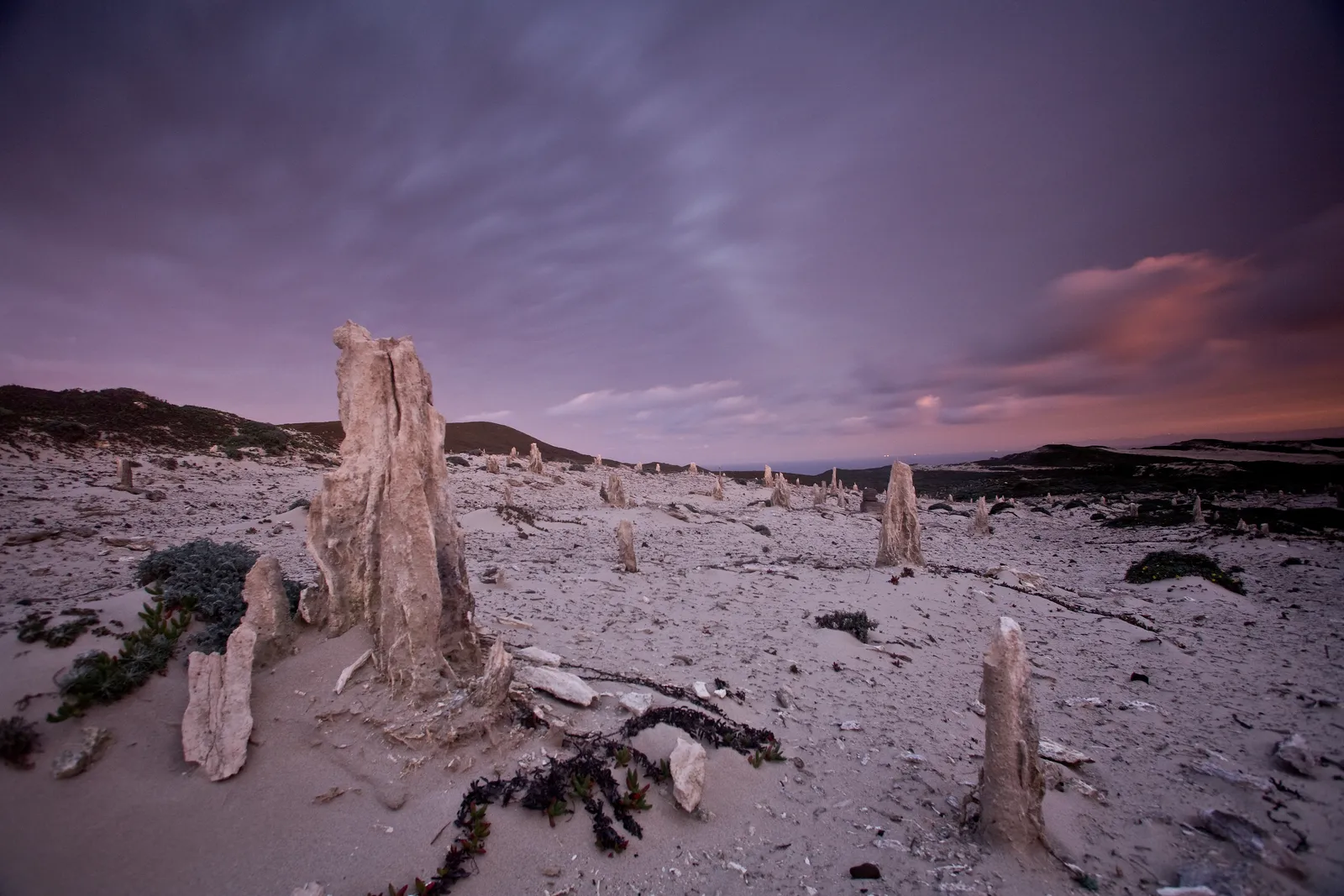
The Caliche Forest Hike leads to one of the most unusual geological features in the Channel Islands — a ghostly landscape of calcified plant casts that formed when ancient vegetation fossilized in place thousands of years ago. This 5-mile round-trip trek on San Miguel Island requires ranger escort due to unexploded ordnance, making it both exclusive and logistically complex.
Trail Details
- 🏃Activities
- Hiking
- 📊Difficulty
- Hard
- 🔁Trail Type
- out and back
- 📏Distance
- 5 miles
- 📍Location
- CA
- 🐕Dogs Allowed
- No
- 💵Fee
- Free
- 📋Permit Required
- Yes
Overview
San Miguel Island sits at the far edge of the Channel Islands chain, windswept and remote enough that the Navy still owns it and unexploded ordnance surfaces in the shifting sand. The caliche forest represents something genuinely rare: prehistoric vegetation that calcified in place when calcium carbonate reacted with organic acids from decaying plants, leaving behind stone casts of an ancient ecosystem.
The hike follows the Point Bennett Trail across the island's plateau, which rises 400 to 800 feet above the Pacific. This isn't a backcountry adventure in the traditional sense — you're walking with a park ranger on established trails across terrain that feels more like the surface of another planet than coastal California. The landscape is stark, almost lunar, shaped by relentless winds and salt spray.
What to Expect
The trail crosses San Miguel's characteristic terrain: windswept grassland and low shrubs with expanses of sand and caliche formations. The most dramatic specimen in the caliche forest is a massive log cast — 2½ feet in diameter and about 30 feet long — that gives you a sense of the scale of vegetation that once thrived here during wetter, cooler climate periods. The fossilized remains include what may have been pines and cypresses, species that couldn't survive on the island today.
The experience is as much about the journey as the destination. San Miguel feels untouched in ways that the other Channel Islands don't, partly because access is so restricted and partly because the environment is so harsh. The island's isolation creates an eerie quiet broken mainly by wind and the distant sound of waves.
Weather shapes everything here. Fog can roll in without warning, and the wind rarely stops. The island's exposure means conditions can change quickly, and the ranger escort isn't just about ordnance safety — it's about having someone who knows the island's moods and can make real-time decisions about route and timing.
Tips & Logistics
The logistics start before you ever set foot on San Miguel. The island requires a permit and liability waiver, and it's only accessible when NPS personnel are present. Island Packers runs boats from Ventura Harbor, but it's at least a 5-hour crossing each way. Most people overnight either camping or on a boat, because trying to do this as a day trip means you're looking at 10+ hours of boat time plus the hike.
Contact park headquarters at (805) 658-5730 to arrange the ranger escort. You can also reach the San Miguel ranger on Marine Radio Channel 16 once you're on the island. The ranger sets the pace and determines how long you spend at the caliche forest based on conditions and group dynamics.
Bring layers. The island's weather can swing from sun to fog to wind in the span of an hour. Water is critical — there are no natural sources on the trail, and the combination of wind exposure and physical exertion means you'll go through more than you expect. Everything you need comes with you on the boat.
Stay on trail. The ordnance concern is real, not theoretical. Live explosives still surface occasionally in the shifting sand, and the consequences of wandering off established routes extend far beyond a citation.
For those with extra time and energy, the Point Bennett Trail continues beyond the caliche forest to Point Bennett itself — a 14-16 mile round-trip that leads to one of the largest pinniped rookeries on the West Coast, where up to 30,000 seals and sea lions sometimes gather.