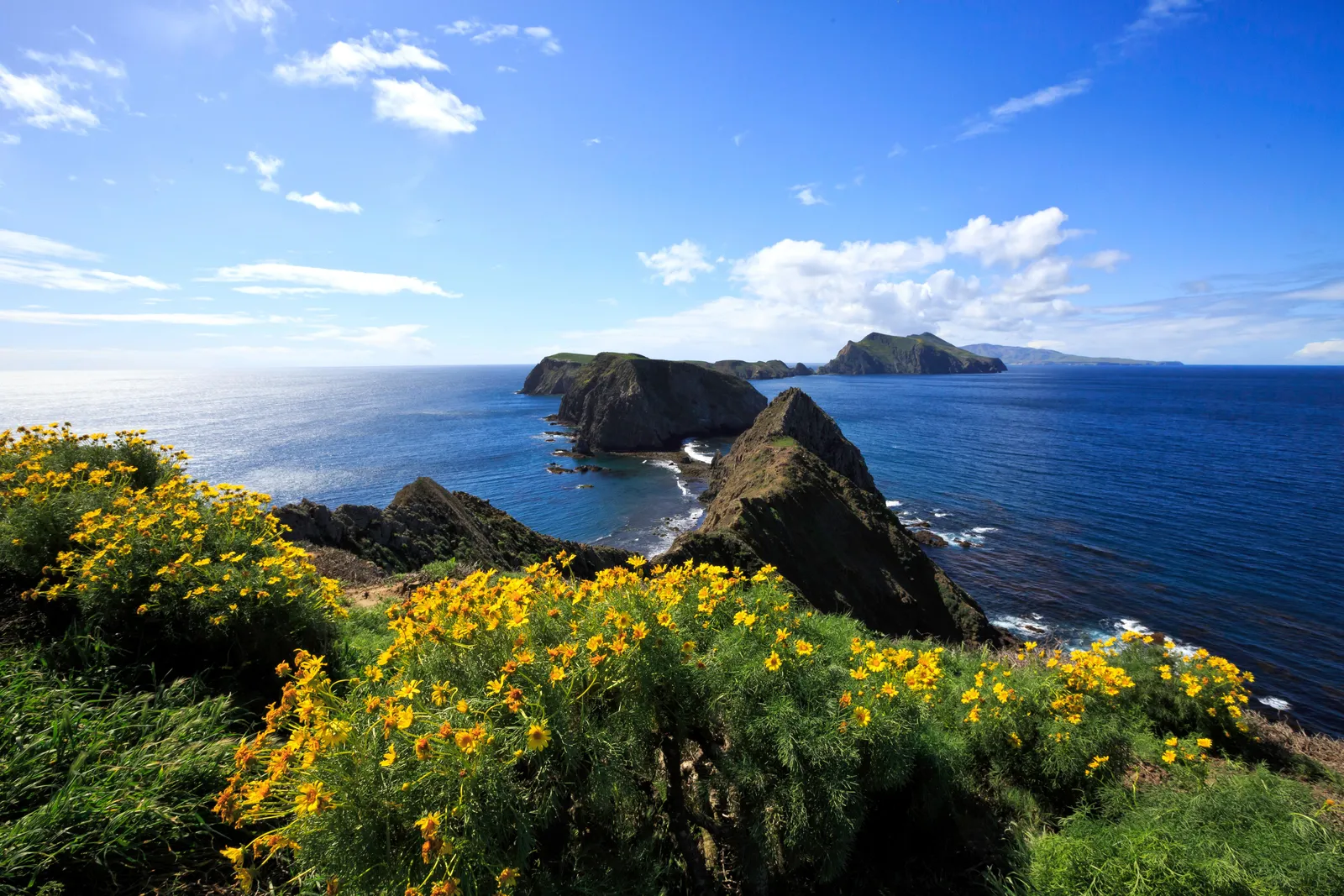
Channel Islands National Park
CA
Channel Islands National Park is five islands off the Southern California coast — close enough to see from Ventura on a clear day, remote enough that getting there requires a boat, a reservation, and a plan. The backcountry here isn't measured in trail miles but in logistics: ferry schedules, water you carry from the mainland, wind that can strand you for days, and an ecosystem so isolated it evolved its own foxes. For paddlers, backpackers, and divers willing to work for it, the Channel Islands offer some of the last truly wild coastline in Southern California.
Details
- 🏞️Type
- National Park
- 🏛️Managed by
- National Park Service
- 📍State
- CA
- 🗺️Address
- 1901 Spinnaker Drive, Ventura, CA, 93001
- 📞Phone
- 8056585730
- 🕐Hours
- The park is open 24 hours a day. Services and facilities have separate hours. Please see descriptions of those facilities elsewhere.
- 🐾Pets Allowed
- No
- ♿Accessibility
- limited
- 🥾Activities
- astronomy, stargazing, boating, motorized boating, sailing, boat tour, camping, backcountry camping, canoe or kayak camping, group camping, compass and gps, orienteering, fishing, saltwater fishing, food, picnicking, guided tours, self-guided tours - walking, boat tour, hiking, backcountry hiking, front-country hiking, off-trail permitted hiking, paddling, canoe or kayak camping, kayaking, stand up paddleboarding, junior ranger program, scuba diving, snorkeling, surfing, swimming, saltwater swimming, wildlife watching, birdwatching, park film, museum exhibits, shopping, bookstore and park store
- 📡GPS
- 33.98680, -119.91127
The Place
The Channel Islands sit between 11 and 70 miles off the Ventura and Santa Barbara coast — five islands within the national park (Anacapa, Santa Cruz, Santa Rosa, San Miguel, and Santa Barbara), strung along the Santa Barbara Channel like stepping stones into the Pacific. Santa Cruz is the largest at 96 square miles, bigger than Manhattan. San Miguel is the most remote, wind-scoured and fog-wrapped for much of the year. Santa Barbara, the smallest, floats alone to the south.
What defines the backcountry here is isolation. These islands split from the mainland thousands of years ago, and evolution went its own way. The island fox — a third the size of its mainland gray fox ancestor — is endemic to six of the eight Channel Islands and exists nowhere else on earth. The plant communities, the seabird colonies, the kelp forests offshore — all of it developed in relative seclusion, and the Park Service manages it accordingly. Biosecurity is real: you'll shake out your tent and boots before stepping off the boat, and wooden hiking sticks stay on the mainland.
The backcountry character is unlike anything on the California mainland. There are no long trail systems, no backcountry permits in the traditional sense, no filtering water from creeks because there aren't any. The constraint isn't fitness or navigation — it's logistics. Everything revolves around the ferry schedule, the weather window, and how much water you can carry. The islands reward people who plan well and punish people who don't.
Getting There & Getting In
Island Packers is the sole NPS-authorized boat concessionaire, operating out of Ventura Harbor. The crossing to Scorpion Anchorage on Santa Cruz takes about 90 minutes. Prisoners Harbor, on the north side of Santa Cruz, adds another 30-plus minutes because the boat stops at Scorpion first. Santa Rosa is a 3-hour crossing. San Miguel requires a multi-leg trip through Santa Rosa. Santa Barbara Island runs on a limited schedule from Ventura.
Round-trip fares run $84/adult for Santa Cruz, $138 for Santa Rosa. Ferries generally depart at 9:00 AM. Arrive at Ventura Harbor a full hour early — hatches close 15 minutes before departure, and late arrivals forfeit their ticket. No single item can exceed 45 pounds. Fuel canisters must be separated from your pack. Free overnight parking at the harbor; backpackers get a parking permit from Island Packers.
Kayak transport is available but limited: $23 for boats under 12 feet, $31 for 13-16 feet. No kayaks over 16 feet, no composites, no pedal drives, max 75 pounds. Only 18 kayaks per day are allowed at Scorpion Anchorage. Reserve by phone — this can't be done online and summer slots sell out.
There is no cell coverage on most of the islands. Intermittent signal at Scorpion Anchorage and Potato Harbor on Santa Cruz, essentially nothing elsewhere. A satellite communicator is worth the weight.
When to Go
The park is technically open year-round, but the realistic backcountry season depends on which island and what you're doing.
Spring (March–May) is the best window for backpacking — green hills, wildflowers, cooler temperatures for hauling water. But spring also brings the most wind events and rough seas. Ferry cancellations peak in spring. Book with flexibility.
Summer (June–August) is peak season. May gray and June gloom bring fog and cool mornings through early summer, burning off by July. Afternoons get windy. Everything books out months ahead. Ocean temperatures reach the high 60s by August.
Fall (September–November) is the sweet spot for kayaking and diving. Calmest seas, warmest water (up to 70°F), underwater visibility that can hit 100 feet. Crowds thin. But Santa Ana winds become possible starting in October — hot, dry east winds that flip the normal pattern and can make crossings dangerous.
Winter (December–February) brings storms, larger swell, and cold water. Beautiful clear days between systems, but plan for cancellations. Santa Rosa closes to ferry service by late November. San Miguel is July through November only.
Wind is the dominant variable, not temperature. Prevailing winds blow west-northwest, increasing through the day. Santa Rosa and San Miguel regularly see 30-knot winds. Morning hours are almost always better for kayaking, before the wind builds.
Permits & Regulations
There's no backcountry permit in the traditional sense. What you need is a campsite reservation and a boat ticket — and both require advance planning.
All campsite reservations go through Recreation.gov, opening six months in advance. Frontcountry sites run $15/night. Santa Rosa backcountry beach camping is $10/night. The critical move: book your boat first to confirm transport availability, then lock in the campsite. Scorpion Canyon's 25 sites book fast on weekends; Del Norte's 4 backcountry sites fill quickly in spring.
Santa Rosa backcountry beach camping is available August 15 through December 31, with restricted zones through mid-September. This is for experienced, self-sufficient backpackers — you're packing out all human waste with WAG bags, carrying all water from Water Canyon campground, and navigating cross-country without trails.
Bear canisters aren't a thing here, but fox boxes are. Every campsite has them, and you'll use them — island foxes are bold enough to enter tents, and ravens can unzip backpacks. This isn't hyperbole; trip reports document it regularly. All food containers must also be mouse-proof: deer mice on the islands carry hantavirus.
No campfires, anywhere, ever. Stoves only. No wooden hiking sticks (biosecurity). Shake out all gear before arriving to prevent seed and soil transfer. Bring extra food for at least two additional nights — weather delays are real, especially outside summer.
Routes Worth Knowing
Prisoners Harbor to Scorpion Canyon (Santa Cruz Island) — The only real multi-day backpacking route on the islands. Roughly 13-15 miles over a minimum of 3 days/2 nights, dictated by ferry timing. Day one drops you at Prisoners Harbor and climbs steeply to Del Norte backcountry camp (3 miles, but harder than it sounds in midday sun with no shade). Day two traverses Montanon Ridge to Scorpion — 11 miles of exposed ridgeline with constant ocean views and zero other people. Near High Mount, social trails can lead to cliff edges; downloaded GPS maps are essential. Side trip to Potato Harbor is worth the detour: white cliffs, turquoise water, sea lion colonies below. Day three, explore Scorpion area and catch the boat home. You must carry all water for days one and two — there is no water source until Scorpion. Plan on a gallon per person per day minimum.
Sea Cave Kayaking at Scorpion Anchorage (Santa Cruz) — The island's signature experience. Dozens of sea caves within a mile of the anchorage, including Cavern Point Cave (0.8 miles out, the deepest), the Green Room at Scorpion Rock (famous for its light effects, closed February–June for nesting), and Elephant's Belly, a through-cave with sharp walls and unpredictable surges. Guided tours through Channel Islands Adventure Company run half- to full-day. Independent kayaking requires mainland rental and ferry transport. Morning conditions are consistently better than afternoon.
Water Canyon to Backcountry Beaches (Santa Rosa) — Open late summer through fall. From Water Canyon campground, routes head to remote beaches along the southeast, southwest, and northwest coasts. No trails — this is cross-country navigation on exposed, windswept terrain. Fill water at Water Canyon because there's nothing else. NPS rates this for experienced backcountry travelers only, and they mean it.
Anacapa Island Day Loop — The most accessible island, with a short but exposed trail system along the narrow volcanic ridge. Good for seabird viewing (western brown pelicans, Scripps's murrelets) and a reasonable introduction to island logistics without committing to overnight camping.
Water, Weather & Hazards
Water is the defining logistical challenge. Potable water exists at exactly two locations in the entire park: Scorpion Canyon campground on Santa Cruz and Water Canyon campground on Santa Rosa. Both are treated but some visitors find the taste unpleasant. There are no reliable natural water sources on any hiking route. You carry everything or you go thirsty. For the Prisoners-to-Scorpion traverse, experienced backpackers report carrying 4-5 liters per person per day and calling it tight. Consider non-cook meals for some dinners to conserve water.
The Channel crossing itself is a hazard worth respecting. Seasickness is common — take Dramamine before boarding, sit outside in fresh air, and know that the Prisoners Harbor route (2+ hours) is rougher than the Scorpion run (90 minutes). On the islands, crumbling cliff edges are the most serious terrain hazard. NPS warns that edges may be undercut — fatal falls have occurred.
Most of the hiking terrain above the canyons is completely treeless and exposed. The Montanon Ridge section of the Santa Cruz traverse offers no shade for 11 miles. The combination of no shade, ocean-reflected UV, and wind makes sun exposure more intense than comparable mainland hiking. Bring a hat, sun protection, and more sunscreen than you think.
Rattlesnakes are notably absent from the Channel Islands — one of the ways island ecology diverges from the mainland. Ticks, poison oak, cactus, and yellow jackets are present. Ocean currents outside protected coves are strong and dangerous. No lifeguards anywhere in the park. Ship wake from large vessels in the Santa Barbara Channel can create hazardous conditions inside sea caves even on flat days.
For emergencies, NPS dispatch is at 559-565-4221 (24/7, routed through Sequoia-Kings Canyon). On water, VHF Channel 16 reaches the Coast Guard. Response times to the islands are measured in hours, not minutes.
Finding Solitude
Scorpion Anchorage on summer weekends is the crowd magnet — day-trippers, kayak tours, and campers concentrated in one small area. It's busy by Channel Islands standards, though still quieter than any mainland beach.
The solitude gradient is steep. Del Norte backcountry camp on Santa Cruz has four sites and feels like another world from Scorpion, three miles and one steep climb away. Montanon Ridge, connecting the two, sees almost no one. Prisoners Harbor gets a fraction of Scorpion's traffic.
Santa Rosa is emptier still — 15 campsites for the entire island. The backcountry beach camping zones, open late summer through fall, may put you on a beach completely alone. San Miguel, accessible only July through November with ranger escort requirements for the interior, is the quietest island in the California national park system.
The time-of-year strategy is straightforward: avoid summer weekends at Scorpion. Weekdays in spring and fall offer the best ratio of good conditions to low crowds. The outer islands (Santa Rosa, San Miguel) are inherently uncrowded because getting there is harder and windier — which is the point.