The Big Stump Trail tells the story of logging's brief, devastating run through the giant sequoias in two miles of easy walking. This loop through what remains of a clearcut grove puts you face-to-face with the Mark Twain Stump — a 16-foot-wide platform you can climb that was once a 1,350-year-old tree felled for a World's Fair display.
Overview
Big Stump Basin is what's left after loggers spent the 1880s cutting down nearly every giant sequoia in sight. The trail drops 150 feet from the picnic area into the meadow where the Smith Comstock Lumber Mill operated, past stumps, partial logs, and the infrastructure of an industry that lasted just long enough to clearcut one of California's ancient groves.
The centerpiece is the Mark Twain Tree stump, a massive platform with a small staircase that lets you climb on top of what was once a sequoia 16 feet across. Two men spent 13 days sawing through this tree in 1891 so the Army could ship cross-sections to exhibitions in New York and London. Standing on top gives you a visceral sense of the scale — and the loss.
The route is less nature walk than outdoor museum. You'll pass the Fallen Giant, a sequoia that shattered on impact when it hit the ground, and the Sawed Tree, a healthy sequoia with century-old saw marks visible in its bark where loggers started cutting, then stopped for reasons lost to history. Shallow ditches called "feather beds" — filled with branches to cushion falling trees — still mark the landscape.
What to Expect
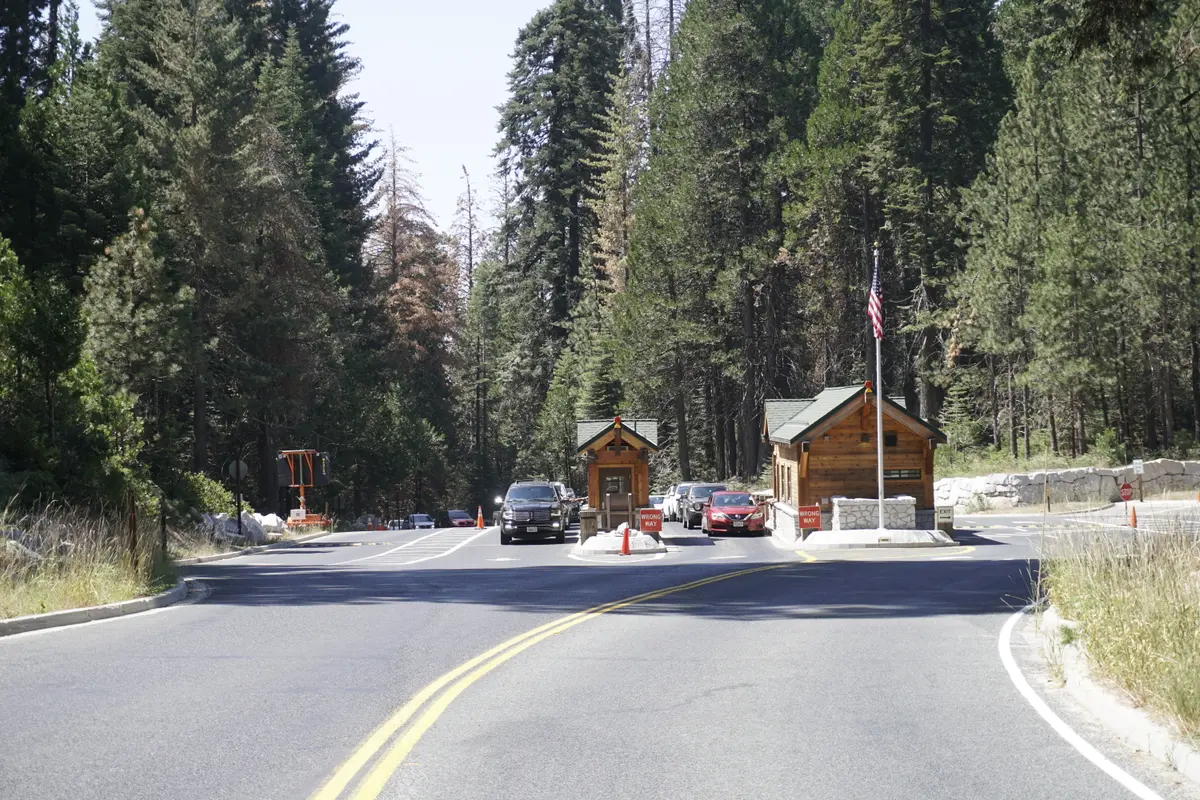
The 2-mile loop starts at the Big Stump Picnic Area about a mile past the park entrance station. You can also pick up the trail where it crosses Highway 180 near the entrance, but the picnic area offers better parking and facilities.
The first half follows a dirt and gravel path that's rough enough to disqualify it as ADA accessible but easy enough for most families. The trail gets rougher on the return loop. Total elevation change is around 200 feet, with most of the descent happening in the first section down to Big Stump Meadow.
Big Stump Meadow itself sits where the lumber mill operated. The contrast is stark — what should be a sequoia grove is now an open meadow punctuated by massive stumps and the occasional surviving tree. The scale of the stumps drives home just how large these trees were and how much was lost in a few short decades of logging.
Tips & Logistics
The trail works year-round but serves different purposes in different seasons. Spring through fall it's a popular family hike and history lesson. In winter it becomes a snowshoeing or Nordic skiing route, with the Big Stump area doubling as an unofficial snowplay zone.
Parking is abundant at the Big Stump Picnic Area, which has covered tables, restrooms, and barbecues. The $35 park entrance fee covers seven days; the $80 annual pass pays for itself quickly if you're planning multiple visits.
Recent prescribed burns in the area may temporarily close portions of the eastern trail, so check current conditions with the park service. The burns are part of ongoing efforts to restore fire cycles to the surviving sequoia groves — a different approach than the one that created Big Stump Basin in the first place.
Plan on an hour for the full loop, longer if you spend time reading the interpretive signs or climbing onto the various stumps. Bring water even though it's a short hike — the combination of elevation and Central Valley heat can be more demanding than the mileage suggests.