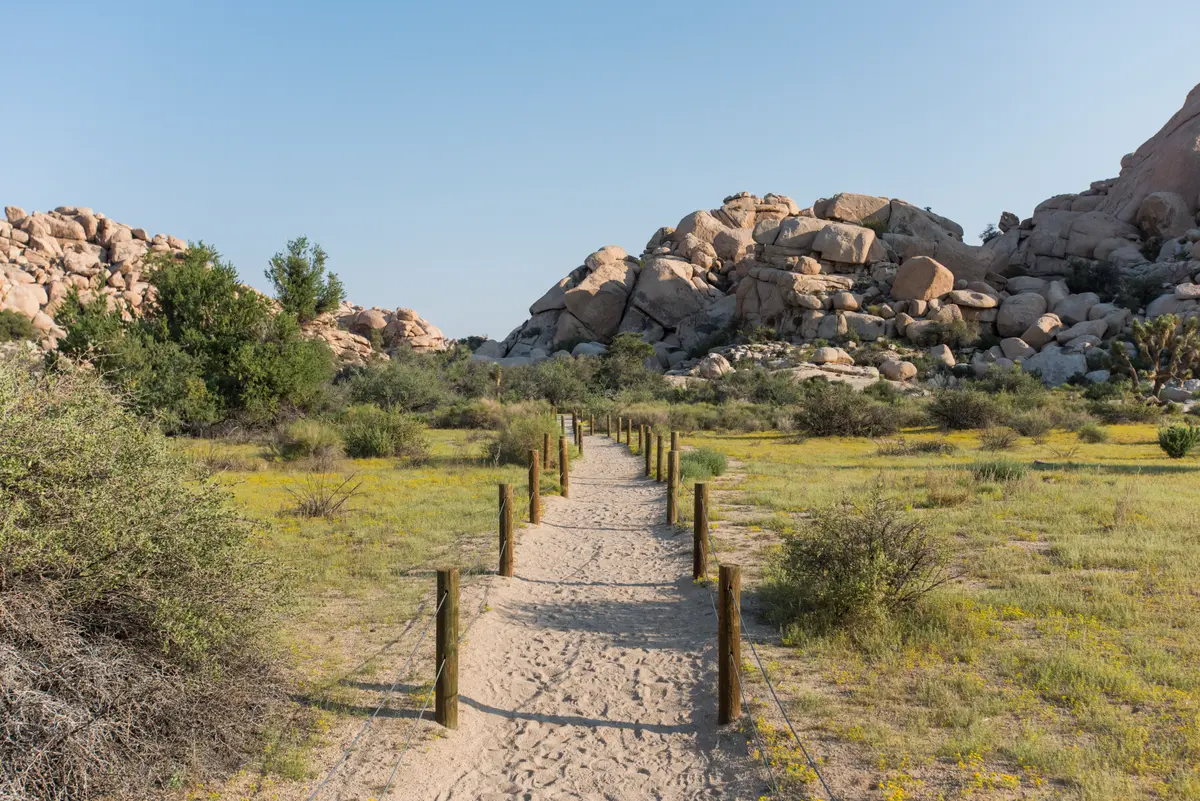
This easy loop through the desert offers a surprising concentration of attractions: a century-old cattle dam, ancient petroglyphs, and classic Joshua Tree boulder terrain. At just over a mile, it's one of the park's most rewarding short walks, accessible to families but interesting enough for anyone wanting to sample what makes this desert landscape distinctive.
Trail Details
- 🏃Activities
- Hiking
- 📊Difficulty
- Easy
- 🔁Trail Type
- loop
- 📏Distance
- 1.1 miles
- 🪨Surface
- dirt and granite boulders
- 🌤️Best Seasons
- january, february, march, april, may, june, july, august, september, october, november, december
- 📍Location
- CA
- 🐕Dogs Allowed
- No
- 💵Fee
- Free
Overview
The Barker Dam Trail delivers Joshua Tree's greatest hits in compact form. You'll thread between house-sized granite monoliths, pass clusters of Joshua trees, and arrive at a concrete dam that's been holding back desert runoff since 1900. The walking is easy — mostly flat with gentle grades — but the terrain shifts from packed dirt to granite boulders that require some stepping and scrambling.
What sets this apart from other short desert trails is the historical layering. The dam itself tells the story of early cattle ranching in what's now the park. The petroglyphs nearby, created by the Chemehuevi people, push that timeline back a couple thousand years. It's a concentrated lesson in how different groups have used this landscape.
The trail works as a loop, so you can knock it out efficiently or take time to explore the rock formations that beckon from every direction. Either way, budget more than the 45 minutes of pure walking time — the dam and petroglyphs warrant stops, and the boulder terrain invites scrambling.
What to Expect
You'll start on compact dirt, the kind of surface that makes Joshua Tree hiking deceptively easy at first. The Joshua trees here are mature specimens, their twisted arms creating natural sculpture gardens between the granite domes. As you approach the dam area, the trail transitions to boulder-hopping — nothing technical, but you'll be stepping on and over granite slabs rather than following a clear dirt path.
Barker Dam itself is a modest concrete structure, but it serves as one of the few reliable water sources in this section of the park. During dry periods, the reservoir sits empty. After winter rains or summer monsoons, it can fill enough to attract bighorn sheep, desert birds, and other wildlife that depend on these rare water sources. The viewpoint sits atop a flat granite boulder that provides a good perspective on the dam and surrounding desert.
A short detour leads to the petroglyph site, where Chemehuevi artists carved symbols into the dark desert varnish coating the rock faces. The images are subtle — look for geometric patterns and animal figures that blend into the natural coloration of the stone.
The terrain includes what the park service calls "tight squeezes between boulders" and sections of sandy wash. Trail width averages three feet, but the granite sections require more attention to footing than a typical dirt trail.
Tips & Logistics
Park along Barker Dam Road, about 1.5 miles north of the turnoff from Park Boulevard. The parking area fills during peak season (September through May), so arrive early if you're visiting on weekends or holidays. The trailhead is well-marked and clearly signed.
October through April offers the most comfortable conditions, when temperatures stay reasonable and the dam is more likely to hold water. Summer hiking is possible but requires early starts and extra water — the exposed terrain offers virtually no shade.
Standard park entrance fees apply: $30 for a seven-day vehicle pass. No permits required for day hiking.
Bring more water than the short distance suggests — desert conditions dehydrate you faster than you expect, even on easy terrain. Sturdy shoes help with the boulder sections, though nothing approaching technical footwear is required. The optional scrambling opportunities around the dam area reward those who want to explore beyond the main trail.
Note that pets aren't allowed and crossing the dam or entering the water is prohibited to protect the wildlife habitat.