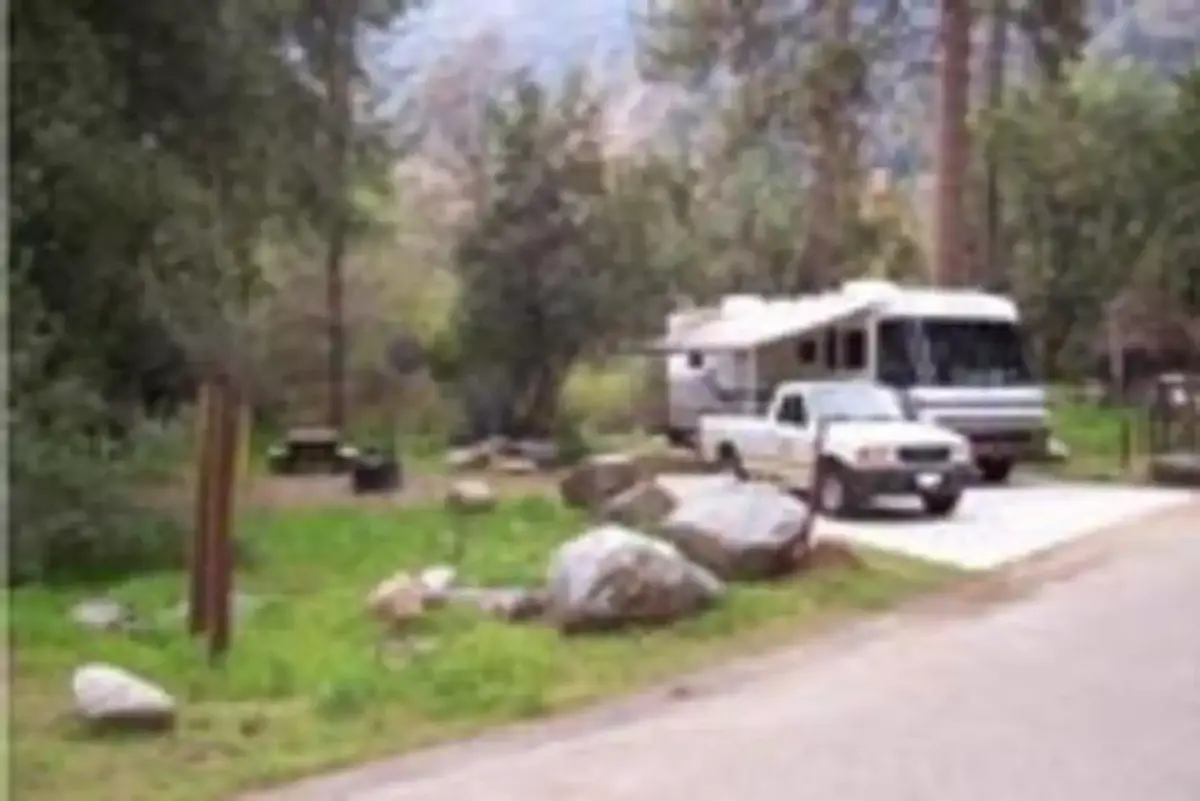
Wishon Campground sits where two forks of the Tule River converge in Sequoia National Forest, with a creek running right through the 35-site complex at 4,000 feet elevation. The setup works for families who want developed amenities with easy river access and proximity to giant sequoia groves.
Campground Details
- ⛺Type
- Developed
- 🏕️Total Sites
- 35
- 💵Fee per Night
- $36
- 📋Reservations
- Reservation Required
- 🏔️Elevation
- 4,000 ft
- 📍GPS
- 36.19014, -118.66413
- 🌤️Best Seasons
- spring, fall
- 🐾Pets Allowed
- Yes
- 📞Phone
- 559-539-5230
- 🗺️Address
- CA
Amenities
The Camp
The campground spreads across three distinct sections: a Front Entrance area with sites 2-9, the Main Loop holding sites 11-33, and a Doubles Spur with sites 34-36 for larger groups. Most of the 35 sites are singles, with four double sites available. The Tule River, which flows down from the Golden Trout Wilderness, provides the soundtrack, and there's actual wading at Wishon Fork for those who don't mind cold mountain water.
Each site comes with the standard Forest Service setup: picnic table, fire ring, and access to vault toilets. No hookups or showers, but the creek running through camp and river proximity make up for basic facilities.
What to Know
All 33 reservable sites book up during peak season, so plan ahead. The campground operates year-round, though spring and fall offer the most comfortable temperatures at this elevation. Sites in the Main Loop tend to be more developed, while the Front Entrance section puts you closer to the water.
Nearby
Rose Grave Trailhead launches hiking options directly from the area, though specific trail details aren't readily available. The real draw lies in the six remnant giant sequoia groves scattered nearby: Wishon, Silver Creek, Burro, Maggie Mountain, Middle Tule, and Upper Tule Groves. These smaller groves see fewer crowds than the famous parks but still deliver that cathedral-quiet sequoia experience. Fishing opportunities exist along the Tule River system, particularly where the forks converge.