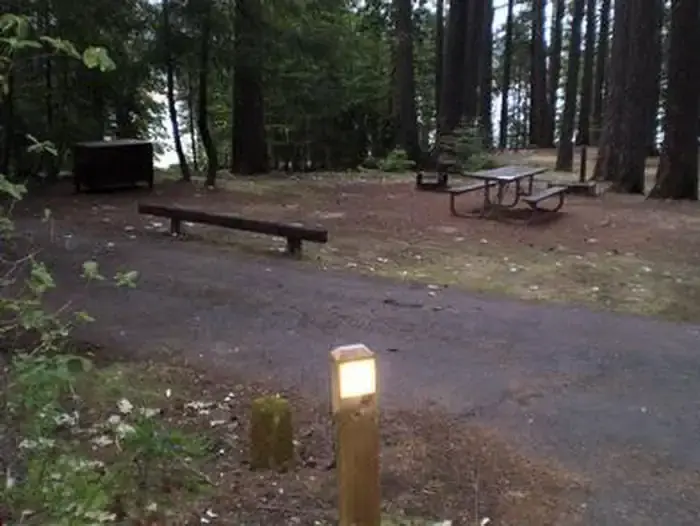
Tannery Gulch Campground spreads across four loops along Trinity Lake's shoreline, with three loops offering direct lake views through a canopy of conifers and deciduous trees. The setup delivers both lake access and forest camping, with a private boat ramp and swim beach reserved exclusively for campers.
Campground Details
- ⛺Type
- Developed
- 💵Fee per Night
- Free
- 📍GPS
- 40.83667, -122.84806
- 🐾Pets Allowed
- No
- 📞Phone
- 530-275-8113
- 🗺️Address
- CA
The Camp
The campground's four loops sit at 2,370 feet elevation on Trinity Lake's shores, surrounded by the Trinity Alps. Sites come with the standard developed campground kit: paved parking spurs, picnic tables, fire pits, plus some bear-proof food lockers where the local black bear population makes regular appearances. Flush toilets and drinking water keep things civilized.
Three of the four loops score lake views, though the source doesn't specify which loop misses out or how the sites differ beyond that. The mix of conifers and deciduous trees provides shade, and campers get exclusive use of the on-site boat ramp and swim beach — a significant perk when Trinity Lake draws heavy day-use crowds elsewhere.
On the Water
Trinity Lake serves up the full menu of water activities: power boating, sailing, water skiing, and paddling for the non-motorized crowd. Fishing runs the gamut from catfish to various bass species, plus trout and salmon. Having your own boat ramp means avoiding the launch queues at public ramps during busy summer weekends.
The half-mile Trail of the Trees starts from the campground for those wanting to stretch legs on land, and summer programming happens at the on-site amphitheater.
Nearby
Weaverville, the historic mining town on the National Register, sits close enough for supply runs and offers restaurants, shopping, and self-guided walking tours. The broader Shasta-Trinity National Forest context is worth noting: California's largest national forest, with five wilderness areas and hundreds of mountain lakes within reach.
Bear activity is common here, along with bobcats, mountain lions, and various bird species, so proper food storage isn't optional.