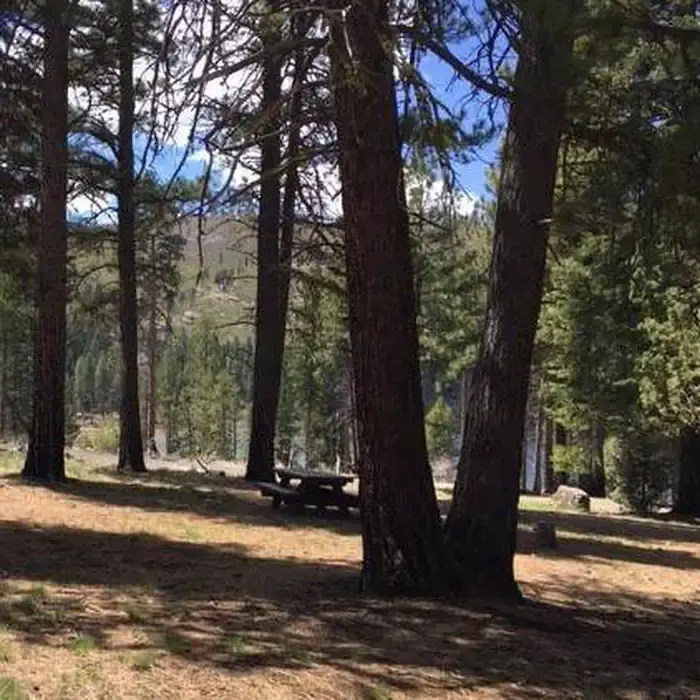
Tucked into the South Warner Mountains of northeastern California, Blue Lake Campground sits beside a remarkably deep blue lake formed by an ancient landslide. The group site offers access to cold-water fishing and a 3-mile lake loop trail, with the South Warner Wilderness within striking distance. This is remote mountain camping with the convenience of summer water service.
Campground Details
- ⛺Type
- Group
- 💵Fee per Night
- Free
- 📍GPS
- 41.14278, -120.28000
- 🐾Pets Allowed
- No
- 📞Phone
- 530-279-8311
- 🗺️Address
- CA
The Camp
The campground occupies a lower elevation pocket surrounded by mountain ridges thick with ponderosa pine, Jeffrey pine, incense cedar, and aspen. Despite a 2003 wildfire that swept through much of the surrounding area, the campground itself was spared — leaving plenty of mature pines for shade while regenerating forest covers the nearby hillsides. Cold mountain streams feed in and out of Blue Lake, keeping the water ice-cold even during the hottest summer days.
The lake's deep blue color comes from its unusual formation. Several thousand years ago, a massive landslide created a natural dam that filled with snowmelt and rainwater over time. That geological accident left behind one of the more striking alpine lakes in the Modoc National Forest.
What to Know
Water service runs from late May through early October, though it's worth calling ahead early in the season to confirm the system is operational. The remote location in northeastern California means this isn't a place you stumble upon — it requires intention to get here, which keeps crowds manageable.
Nearby
The 3-mile trail around Blue Lake provides easy access to the shoreline for fishing or just taking in the scenery. Paved campground roads and the boat dock area offer additional walking and biking options for those staying close to camp.
The South Warner Wilderness sits 6-15 miles away, offering multiple trailheads for those seeking true solitude in the backcountry. For a different kind of adventure, OHV enthusiasts will find popular riding areas on the neighboring road systems.