California State Mining and Mineral Museum Park Property
CA
© Guywelch2000 · CC0 · Wikimedia Commons
The California State Mining and Mineral Museum in Mariposa holds over 13,000 objects tracing the state's mining history from the 1848 Gold Rush forward, anchored by the Fricot Nugget, a 13.8-pound mass of crystalline gold that is the largest intact specimen of its kind from 19th-century California. The museum sits at the Mariposa County Fairgrounds on Highway 49, 1.8 miles south of town, which puts it squarely on the logical route between Yosemite and Gold Country. The $4 admission is not a misprint.
Details
- 🏞️Type
- State Park
- 🏛️Managed by
- California State Parks
- 📍State
- CA
- 🗺️Address
- CA
- 📞Phone
- (209) 742-7625
- 🕐Hours
- Open Thurs-Sun & Closed to the public Mon-Wed - Admission $4, children 12 and under are free. Summer Hours - 10 am - 5 pm May 1-Sept 30 Winter Hours - 10 am - 4 pm Oct 1- Apr 30
- 🐾Pets Allowed
- No
The Place
Mariposa sits at roughly 2,000 feet on the western slope of the Sierra Nevada, where the gold-bearing Mother Lode belt runs through the foothills. This is not incidental geography. John C. Fremont and Kit Carson identified the rich Mariposa Vein in this area, and the county's first ore-crushing mill opened here. The museum's collection, which began as the state mineral collection in 1880, moved to Mariposa in 1983 and became a state park in 1999.
The main floor covers California mining history through equipment, documents, and mineral specimens. The gem collection includes benitoite, California's official state gemstone, which glows electric blue under ultraviolet light in a way that photos don't capture accurately. The Fricot Nugget is behind glass in its own case and draws a longer look than most visitors expect. At 13.8 pounds of crystalline gold, it is visibly different from the rounded river nuggets most people picture.
The walk-through mine tunnel is a full reconstruction with period support timbers and a realistic sense of the confined, dark conditions where hard-rock miners spent their working lives. It takes about five minutes to walk through and reframes the rest of the exhibits. A working scale model of a stamp mill and a recreated assay office round out the industrial history section.
When to Go
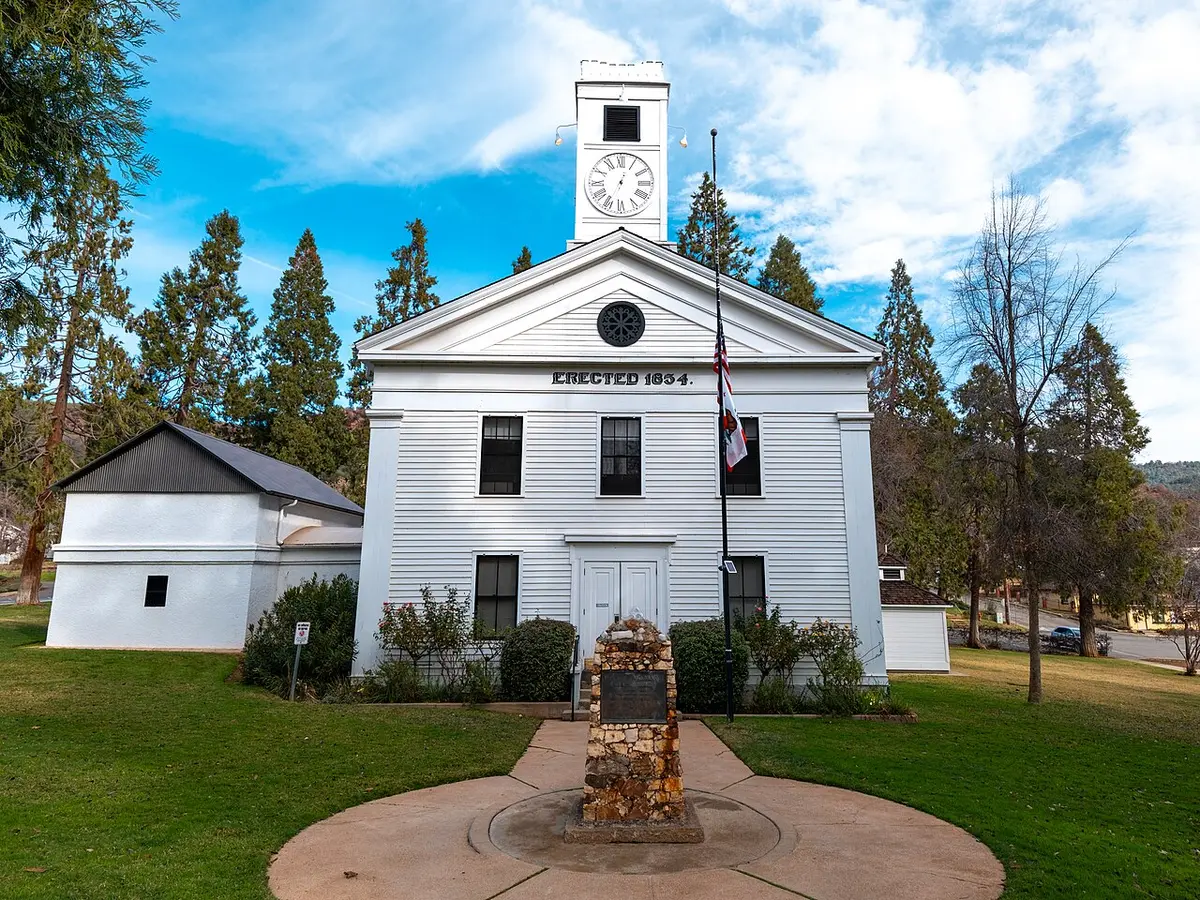
The museum is open Thursday through Sunday only. Summer hours (May 1 through September 30) run 10 AM to 5 PM; winter hours (October 1 through April 30) run 10 AM to 4 PM. Monday through Wednesday, it is closed. Many visitors coming from Yosemite hit this on a Thursday or Friday and combine it with the Mariposa County Courthouse (1854, the oldest continuously operating courthouse in California) and the town's small historic district.
Winter at 2,000 feet sits above the valley tule fog and below the snow line, which makes it one of the more pleasant times to visit. Summer afternoons are warm but not Sacramento-valley hot, and evenings cool off reliably.
Getting There
From Yosemite Valley, take Highway 140 west to Mariposa and then Highway 49 south for 1.8 miles to the fairgrounds entrance. From the Bay Area, Highway 99 to Highway 140 east is the standard approach. From Fresno, Highway 49 north through Coulterville is scenic and slower. There is no public transit to the museum. Parking at the fairgrounds is free.
What to Do
Plan on 60 to 90 minutes for a thorough visit. The guided tour adds context but is not required to appreciate the collection. The Junior Ranger Program is free for children and can be completed during a regular visit without advance notice. School groups and special group tours can be arranged by calling ahead.
The annual gem and mineral show takes place each spring at the fairgrounds and draws collectors from across the state. If you're visiting during that window, buy tickets in advance.
Reservations & Fees
Admission is $4 for adults; children 12 and under are free. No reservations needed for general visits. Dogs are not permitted. No camping on site. The fairgrounds themselves are a separate facility and operate on their own schedule.