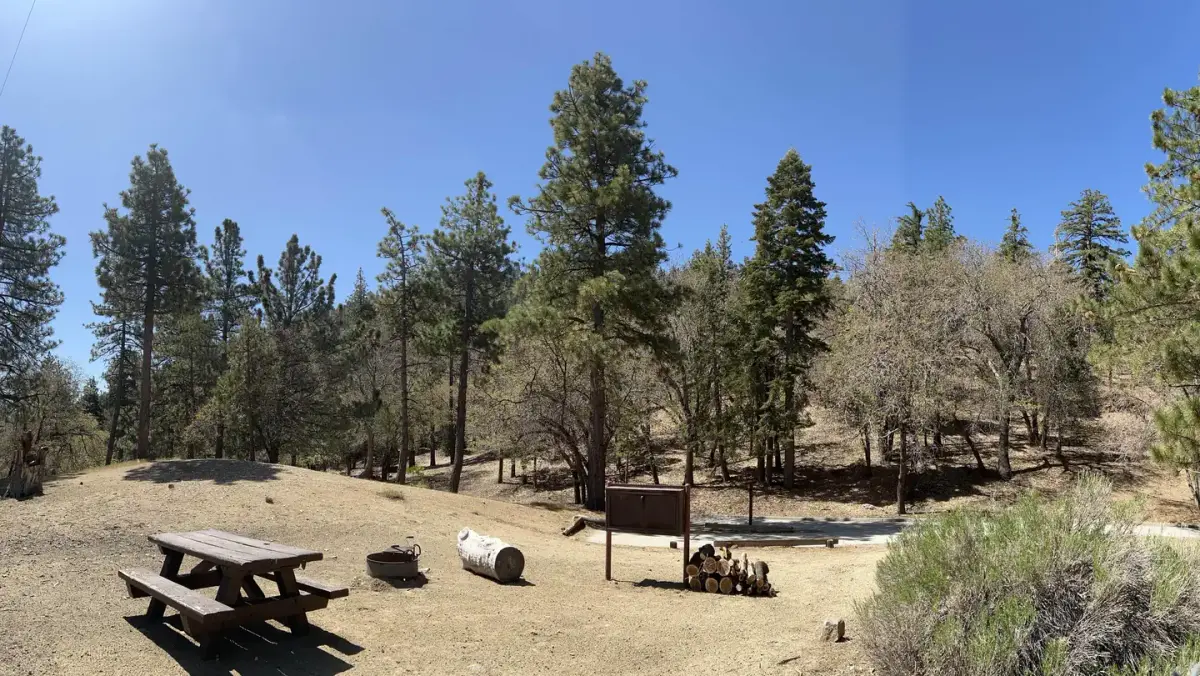
Lake Campground puts you on the shores of Jackson Lake at 6,100 feet, where powerboats are banned and the water stays quiet for swimming and fishing. Eight sites tucked among oaks and Jeffrey pines make this a solid pick for getting away from Los Angeles without driving deep into the backcountry.
Campground Details
- ⛺Type
- Developed
- 🏕️Total Sites
- 8
- 💵Fee per Night
- $30
- 📋Reservations
- Reservation Required
- 🏔️Elevation
- 6,100 ft
- 📍GPS
- 34.39056, -117.72333
- 🐾Pets Allowed
- Yes
- 📞Phone
- 760-249-3526
- 🗺️Address
- CA
Amenities
The Camp
The eight sites here can handle up to eight campers and two vehicles each, set back from the lake under scattered oak trees and Jeffrey pines. Each comes with food storage lockers, grills, and picnic tables. Vault toilets and drinking water keep things civilized, though you'll need to pick up firewood at nearby Mountain Oak Campground.
Summer days typically hit the low 80s before cooling off in the evenings. The lake gets stocked with trout and bluegill, and the no-motors rule keeps Jackson Lake peaceful for canoeing or taking a swim.
What to Know
Reservations are required, and at $30 per night, this place fills up during summer weekends. The elevation means you're above the worst of the valley heat, making it popular with LA-area families looking for a quick mountain escape.
Nearby
The Angeles Crest Scenic Byway runs right past camp, winding through oak thickets, chaparral, and pine forests as it climbs through the San Gabriels. The ski town of Wrightwood sits close by with restaurants and a disc golf course at North Resort.
Both the Blue Ridge Trail and Pacific Crest Trail are accessible from the area. The PCT section here is part of the 2,650-mile route that starts at the Mexican border and heads north through California, Oregon, and Washington. Mountain High Downhill Bike Park offers another option for those bringing bikes.
Wildlife includes the usual mountain suspects: bobcats, mountain lions, and black bears. The forest also hosts Nelson bighorn sheep and endangered California condors, plus migratory species like the Least Bells vireo and Southwestern Willow flycatcher.