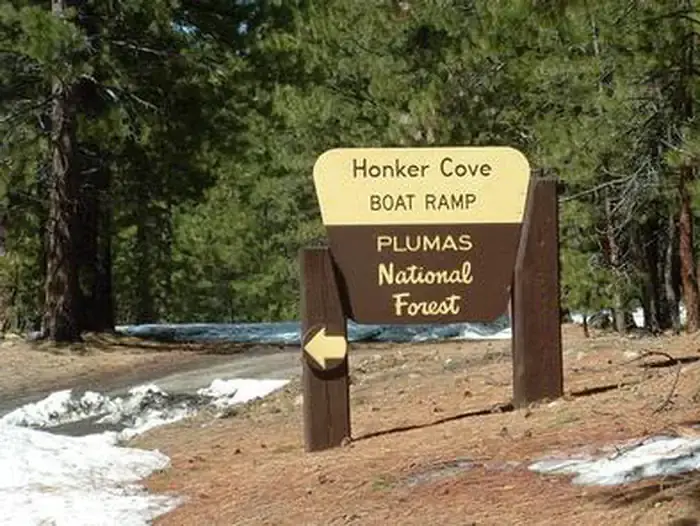
Grasshopper Flat sits on hillsides above Lake Davis, putting most of its 71 sites within sight of the 4,000-acre reservoir. The pine-shaded loops at 5,886 feet offer a solid base camp for lake activities without the crowds of more famous Sierra destinations. This is developed car camping with flush toilets and showers — comfortable enough for families, spacious enough for RVs.
Campground Details
- ⛺Type
- Group
- 🏕️Total Sites
- 71
- 💵Fee per Night
- $38
- 📋Reservations
- Reservation Required
- 🏔️Elevation
- 5,800 ft
- 📍GPS
- 39.89056, -120.47694
- 🌤️Best Seasons
- spring, fall
- 🐾Pets Allowed
- No
- 📞Phone
- 530-836-2575
- 🗺️Address
- CA
Amenities
The Camp
The campground wraps around hills overlooking Lake Davis, giving most sites views across the water toward distant mountain peaks. Pine forest provides afternoon shade across the loops, while paved roads and vehicle pads keep things civilized. Sites come with the standard setup: picnic table, fire ring, and grill, with room for two vehicles each. The large group site handles bigger gatherings.
During peak season, you'll find a campground host, drinking water, coin-operated showers, and flush toilets. A boat ramp and RV dump station sit nearby for those hauling watercraft or larger rigs.
On the Water
Lake Davis spans 4,000 acres with 32 miles of shoreline — built in 1967 to boost fish populations in nearby rivers and supply water to Portola. The lake draws anglers, boaters, and swimmers, with fishing access points scattered around the perimeter. State agencies host free trout fishing days in June and September.
Winter transforms the scene: ice fishing, snowmobiling, and cross-country skiing take over when the lake freezes. The area also offers mountain biking, hunting, and wildlife viewing year-round.
Getting Out
The 7-mile Lake Davis Trail starts less than half a mile from camp, threading around the reservoir. A state game refuge borders the lake to the east and south, extending the wildlife habitat beyond the immediate camping area.
The nearest town, Portola, houses one of the largest railroad museums in the western United States — worth the drive for train enthusiasts or anyone curious about the area's transportation history.